Skip to content

Pretty ordinary #008: Memorial Day edition

What makes a white picket fence so universally appealing?  Is it its association with our idealized notions of American domesticity?  Or maybe just the visual allure of a crisp silhouette standing in contrast to the world around it?

Whatever the reason, the color white is key. We had a new fence installed just after we moved in last August and left the picketed portions to weather over the fall and winter. The fence looked okay, but wasn’t particularly noteworthy, at least until this weekend. I knew this dreaded day was coming, the one when I had to start the tedious process of transforming hundreds of feet of ho-hum unfinished yellow pine to eye-catching bright white. There’s really no good way to paint a fence except one…picket…at…a…time. I know how Tom Sawyer felt.

Over the weekend I managed to paint the five sections of fence directly in front of the house. If you’ve walked by and counted how many are left to go, please don’t tell me, I don’t care to know.

Technically, I’m staining the fence with an opaque acrylic stain called Rubbol, by Sikkens. The product covers well enough to make this a one-coat job, a must for my sanity. Sikkens is well known in the building industry for durable clear coat products, so I’m hoping this stain will stand up to the elements for many years to come.

On this Memorial Day, I share this unquestionably American image of our colonial house with its white picket fence, and offer my sincerest thanks to all those who fight to keep my American dream alive.

white picket fence


Hvratska

Sitting in an orientation session before my freshman year at college, I clearly remember the senior advisor exhorting her wide-eyed audience to get involved in any activities or groups that interested us, even if we didn’t feel fully qualified for them. She told us how she’d never considered herself an athlete because she didn’t play sports, but then remembered that she’d been to the gym every day for three years. If that didn’t make her an athlete, she asked, what did?

I had a similar revelation recently when I realized that Weezie and I have traveled overseas together six times, and have only know each other for six years. I’ve never considered myself a “traveler”, but I think we’re both deserving of the title with so many miles under our belts. Since 2007, we’ve been to the Netherlands, Italy, Spain, France twice and now Croatia (or, Hvratska, as the locals call it), Slovenia and Bosnia.

We’re low-maintenance travelers (no zip-off pants, jammy packs or checked luggage for us), and we get a little better at at it each time we fly away. This year we learned that when we rent a car, things go more smoothly when we’re being guided by a brilliant offline GPS app for smart phones called CoPilot Live HD. On other trips, I’ve had the road atlas thrown at me on more than one occasion after taking the second exit off the roundabout instead of the third (a tip for future honeymooners: sit on the beach).

The best thing about travel is that it rewards you three times: before the trip with excited anticipation, during it with new experiences, and afterwards with good memories. And time away from home makes you appreciate what you have there. This was our first trip since we’ve lived in Hillsborough and though we would’ve gladly hung around in Slovenia for a few more days (weeks, months…), coming back to our beautiful little town and the Ordinary House made reentry into the real world a little bit easier.

While I’m not able to share all 600 of the photos I took, here’s a brief overview of where we went, with some visuals to prove it.

Dubrovnik, Croatia

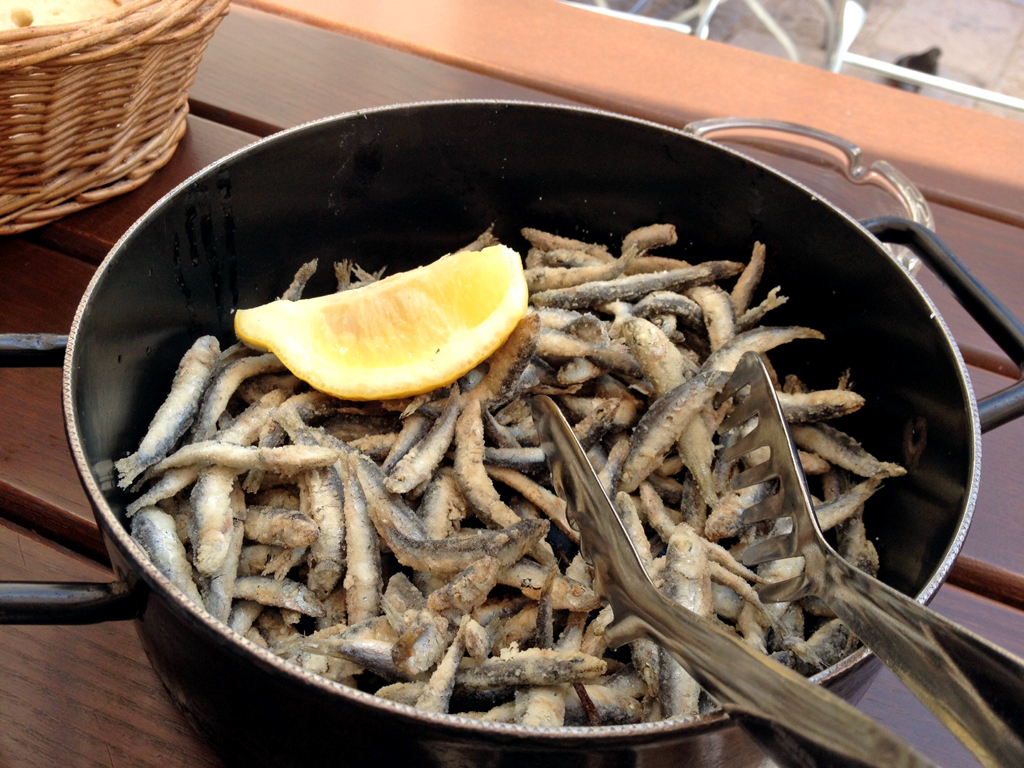
Fun fact: When you order “small fried fish” in Croatia, you’re actually ordering a bucket of fried minnows – see below.

Dubrovnik is well-deserving of its nickname, “Pearl of the Adriatic”. Ringed by 14th century ramparts and paved with marble tiles polished to a shine by visitors’ footsteps, the town draws mobs of tourists from far and wide. If anything, Dubrovnik’s success is also its greatest liability. We learned that there are only around 2,000 year-round residents remaining, and that the population within the town’s walls can grown by more than 10,000 people each day in the summer when cruise ship passengers arrive from their vessels. Even in early May before the summer crush, the crowds were sometimes overwhelming. But the delicious gelato, a cliffside bar called ‘Buza’, and sublime Mediterranean weather made for a fine time nonetheless. We stayed in an apartment in the Old City instead of one of the soulless resort-style hotels that line the nearby peninsula. The only giveaway that this place was at war and under siege only 22 years ago are the new clay roof tiles that top the buildings. Dubrovnik is well worth a visit and is an easy-going introduction to the Balkans.
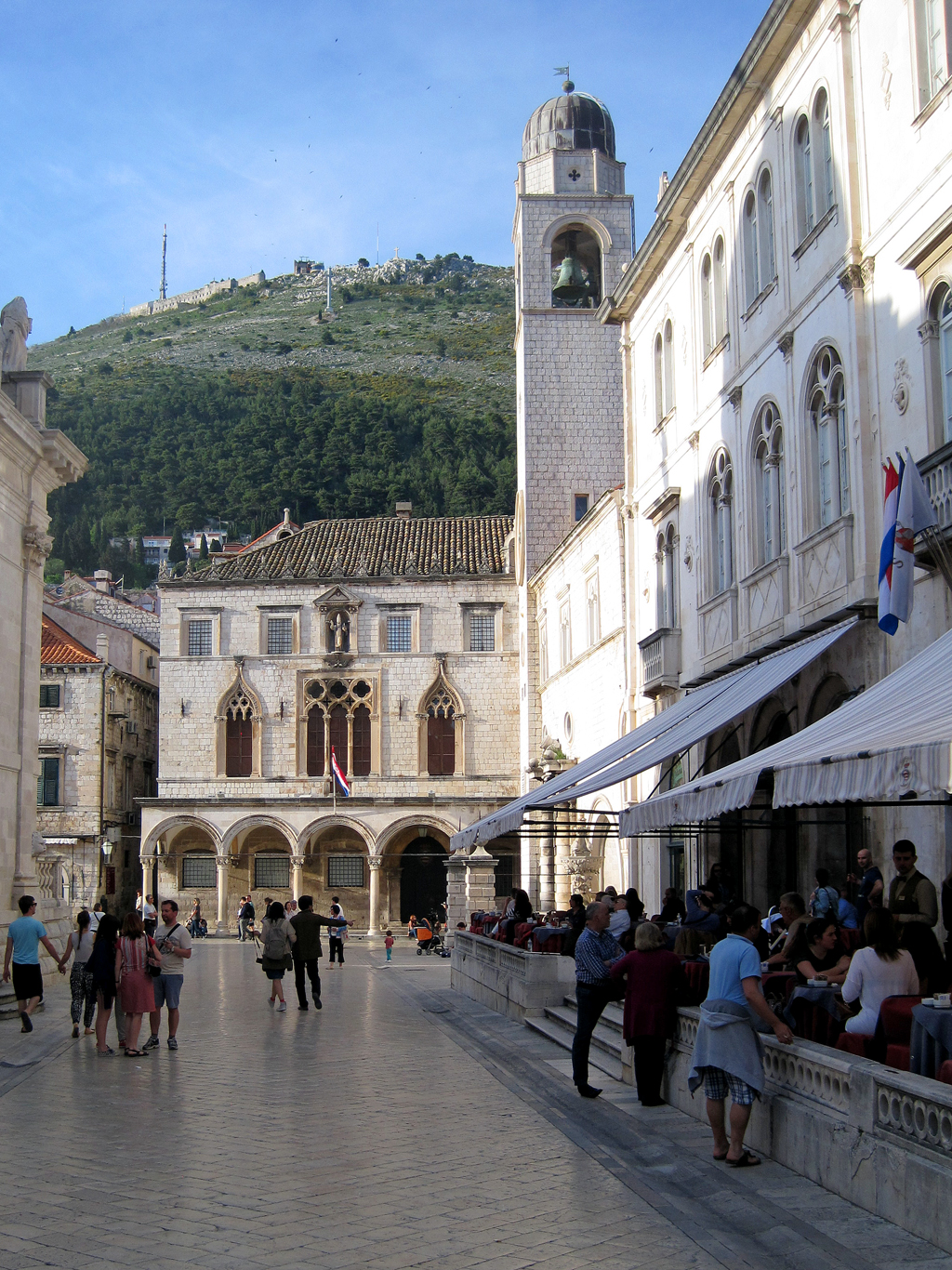
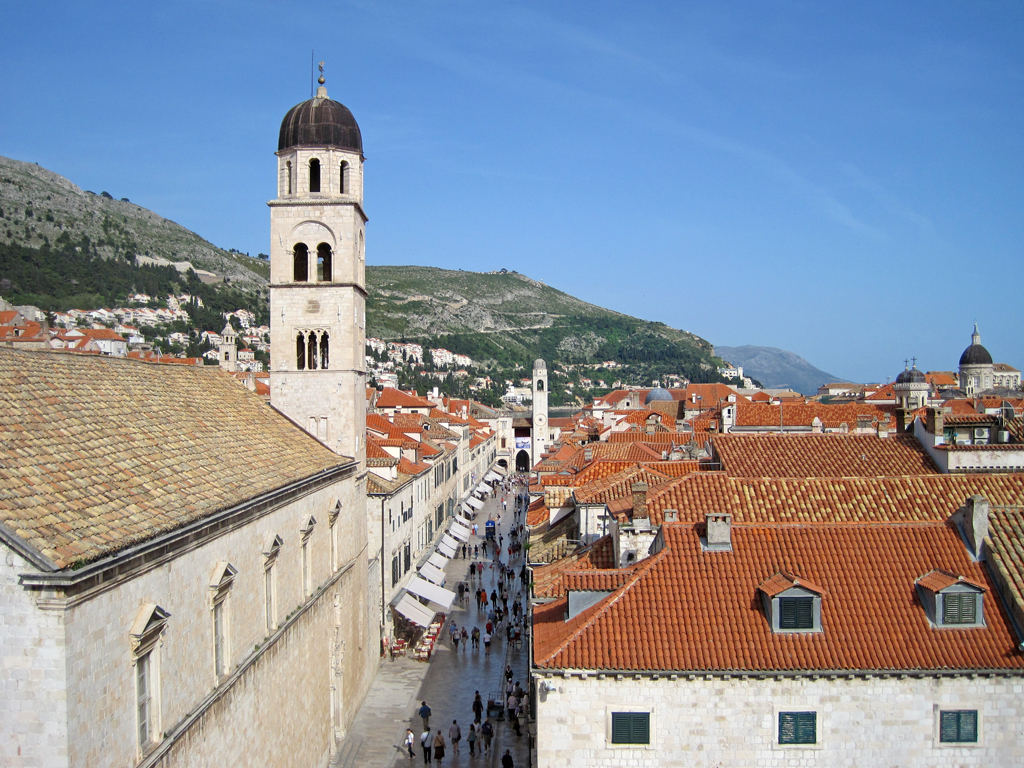
dubrovnik street

stradun

minnows

Mostar, Bosnia

Fun fact: To entertain tourists, speedo-clad young men dive from the peak of the Stari Most bridge that spans the Neretva river in the middle of the old town, but only after they’ve collected enough “donations” to boost their courage.

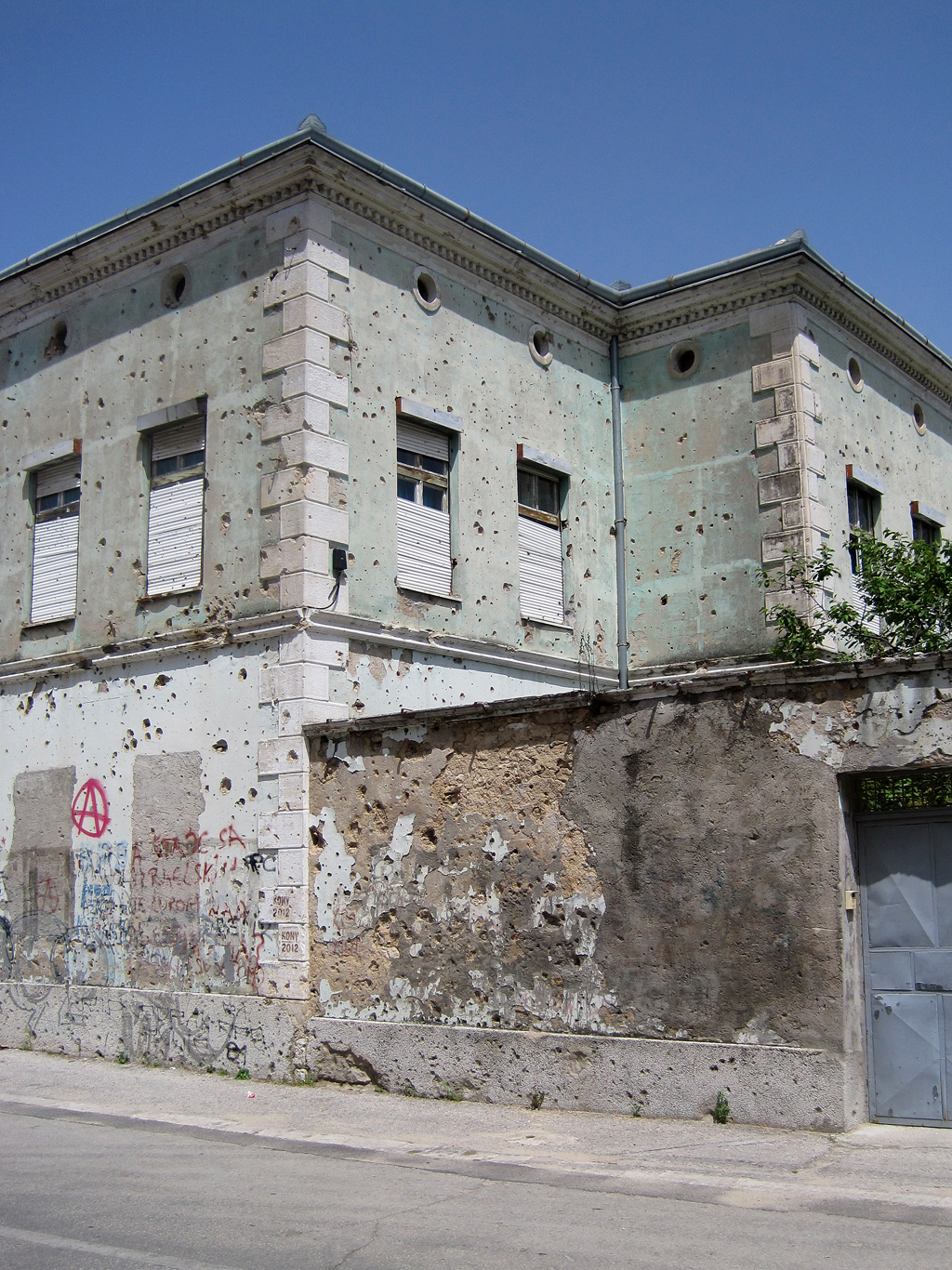
In pursuit of some cultural spice and a semi-exotic visa stamp (which we didn’t get), we detoured into Bonia on our way to our next stop in Croatia. While Dubrovnik’s war damage is nearly imperceptible, it’s all around in Mostar. Shells of bombed out buildings and facades riddled with bullet holes stand only blocks away from the historic center. The main attraction in Mostar is the arched stone Stari Most bridge, destroyed in spectacular fashion during the Bosnian war, but recently rebuilt using the same materials and techniques as in ancient times. Minarets and calls to prayer make Mostar’s Muslim population obvious. The town outside the center is dull and obviously struggling. The border crossing back into Croatia was extremely long and seemed to demonstrate the lingering distrust that exists between the Serbs, Croats and Bosniaks. Despite this delay, I’m glad we made the trip.
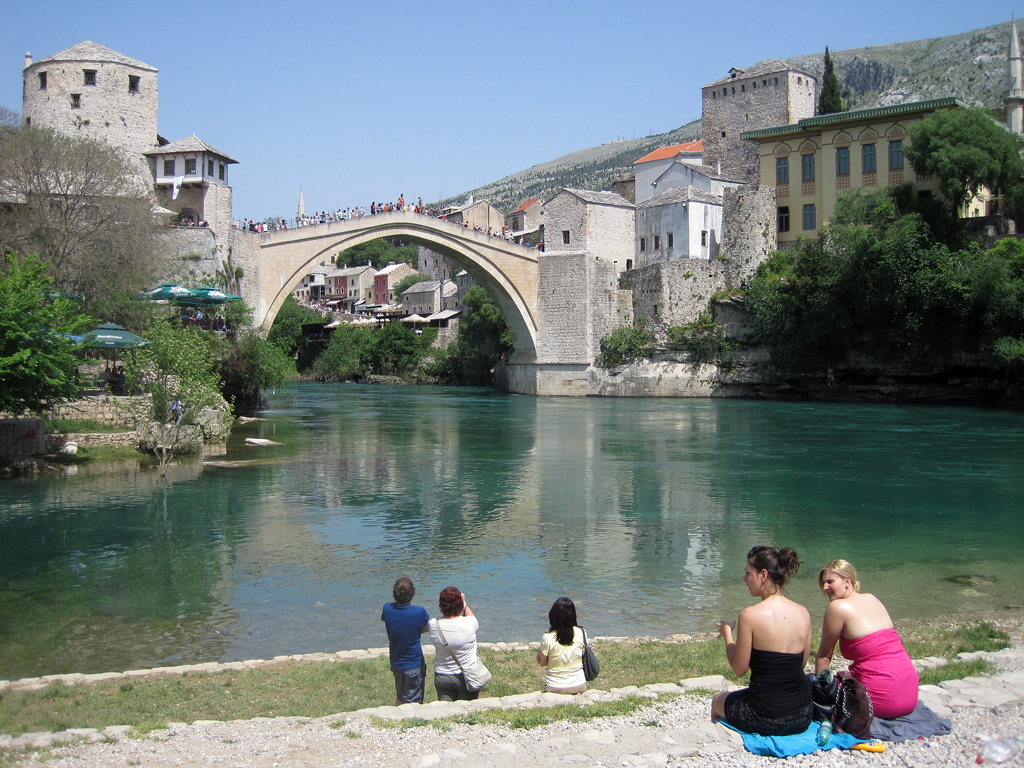
stari grad

war damage

Split, Croatia

Fun fact: Much of old town Split (pronounced ‘spleet’) is actually contained within the remnants of the Roman emperor Diocletian’s retirement palace.

We didn’t leave enough time to explore Split properly, especially since we spent an hour chasing down our hotel receptionist who was having wine with friends at the cafe around the corner. (Note to hoteliers: never, ever close reception and leave a note for your guests to call you at a local number (which requires a calling card and a pay phone) and then tell them to wait while you finish your wine. Ever. It makes those guests VERY grumpy.) While Dubrovnik is something of a museum, Split is a living city built in and around a Roman emperor’s retirement palace. It has a decidedly more cosmopolitain feel than Dubrovnik and is Croatia’s second most populous city after Zagreb. The sea front promenade is abuzz after dark, making it a fun place to hang out in the evening. Even so, this was probably our least favorite stop of the trip.
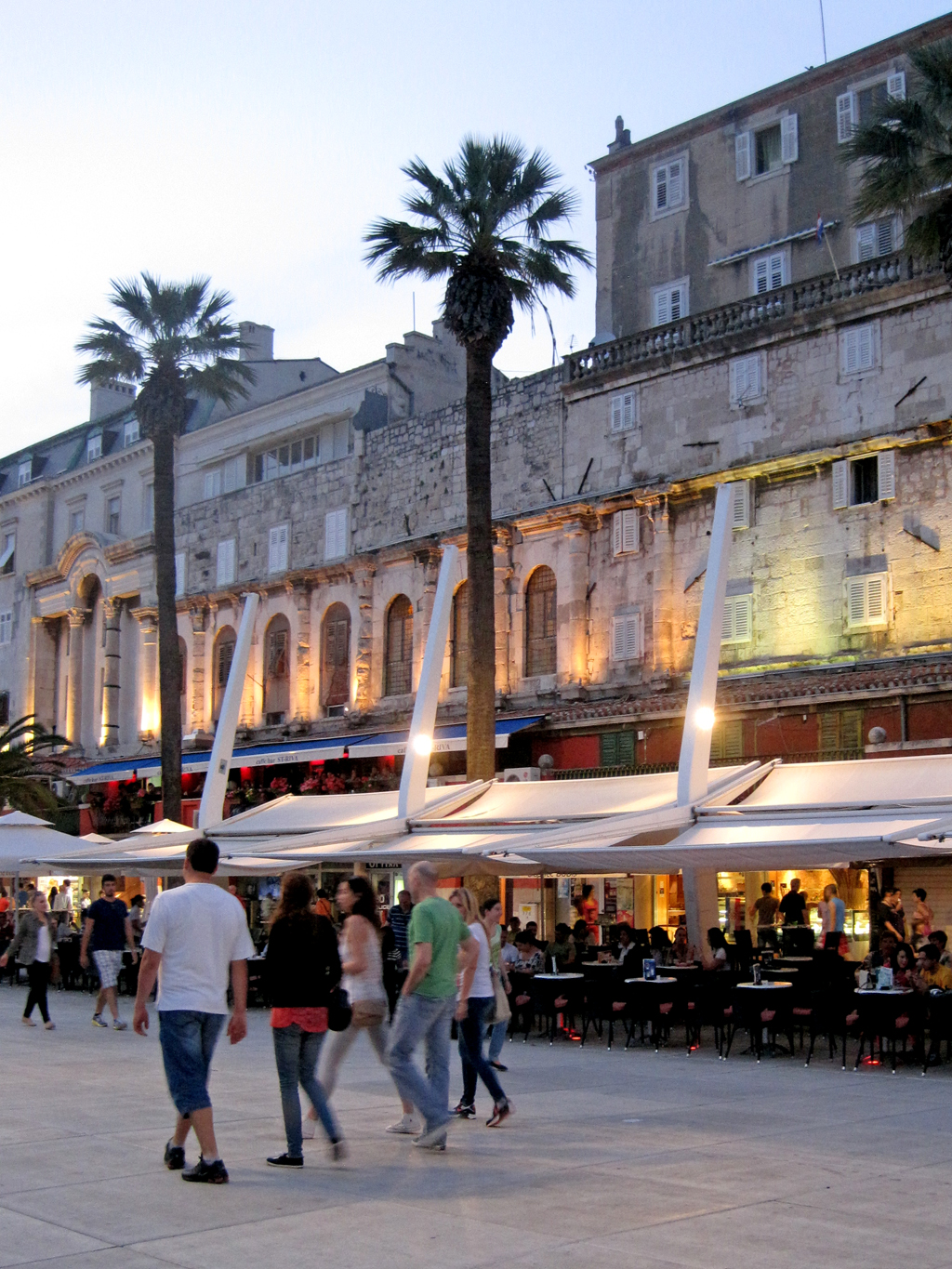
split promenade

Plitvice Lakes, Croatia

Fun fact: The first shots of Croatia’s war for independence from Yugoslavia were fired at the Plitvice Lakes when a man shot the park’s police officer.

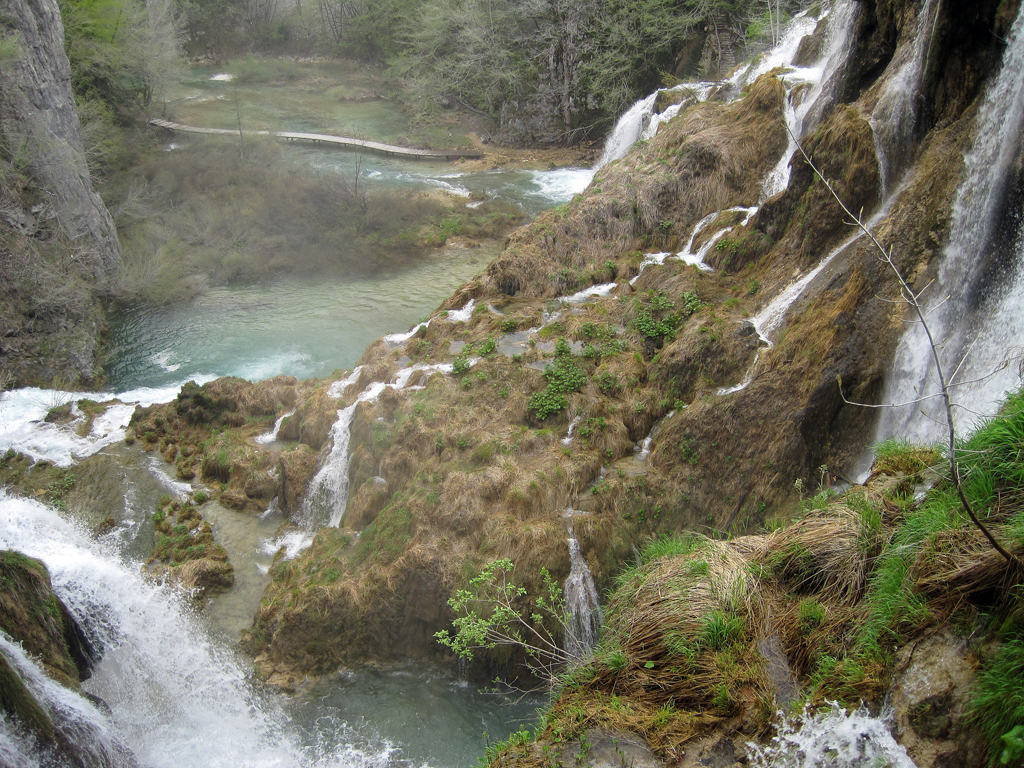
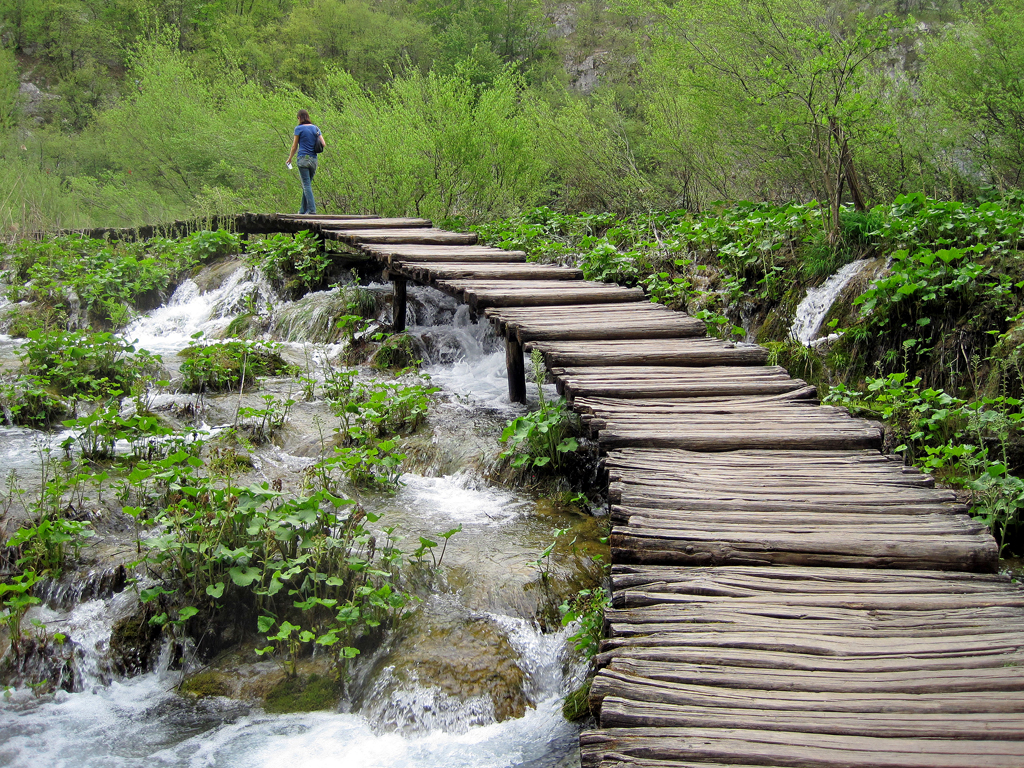
Plitvice is not near anything, but it’s worth driving out of the way to see. A series of lakes that spill into one another in spectacular fashion, this natural wonder has picturesque views at every turn and feels like something out of a Lord of the Rings movie set. Like Dubrovnik, it’s a victim of its own success and is overrun by tourists. Narrow wooden walkways that arc over, around and sometimes through the water give you up close and personal views of the lakes, but make it possible to get stuck behind a slow-moving pack of German tourists who act like they’ve never seen a fish before. We followed the “short” loop, which took around three  hours, but went past most of the significant natural highlights. If you go to Plitvice, I’d recommend staying in the area the night before and devoting a solid half day or more to exploration.
plitvice

boardwalk

Piran, Slovenia

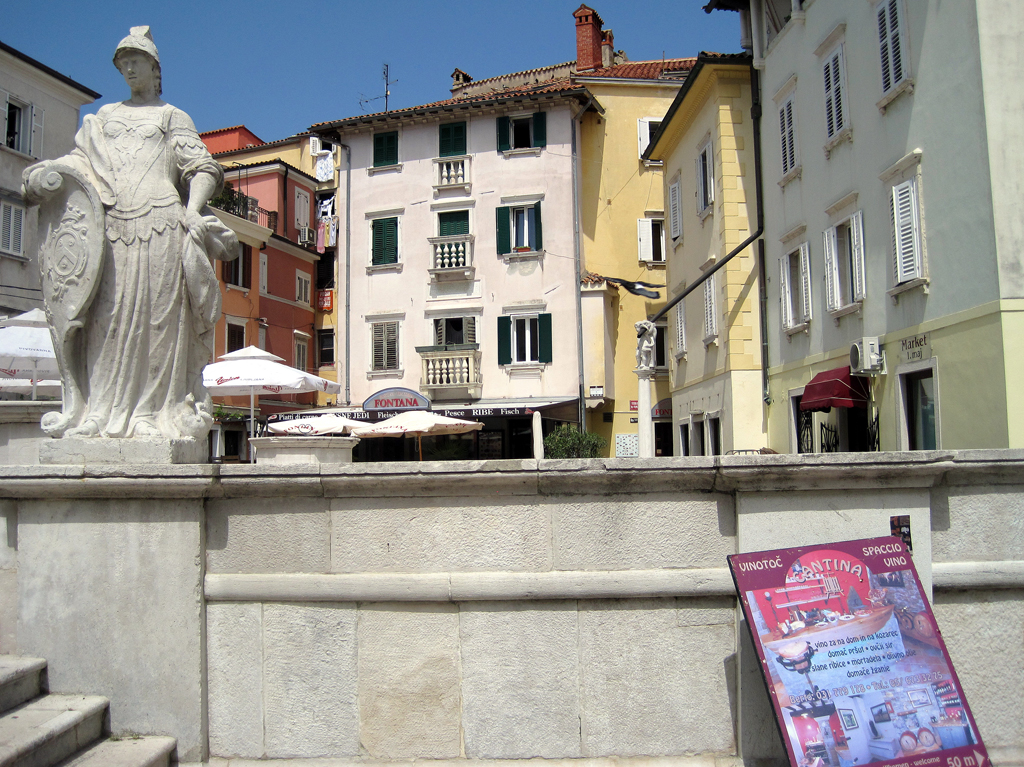
Fun fact: Piran’s main square (Tartinijev trg) used to be part of the town’s marina, until it began to smell like poo and was filled in.

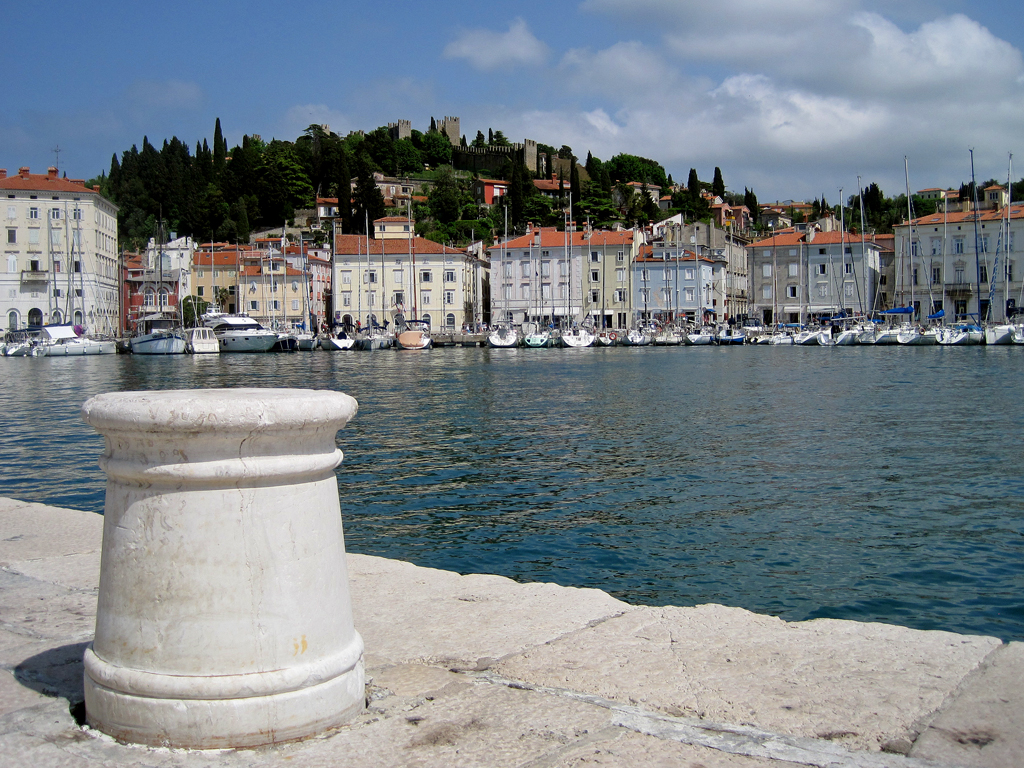
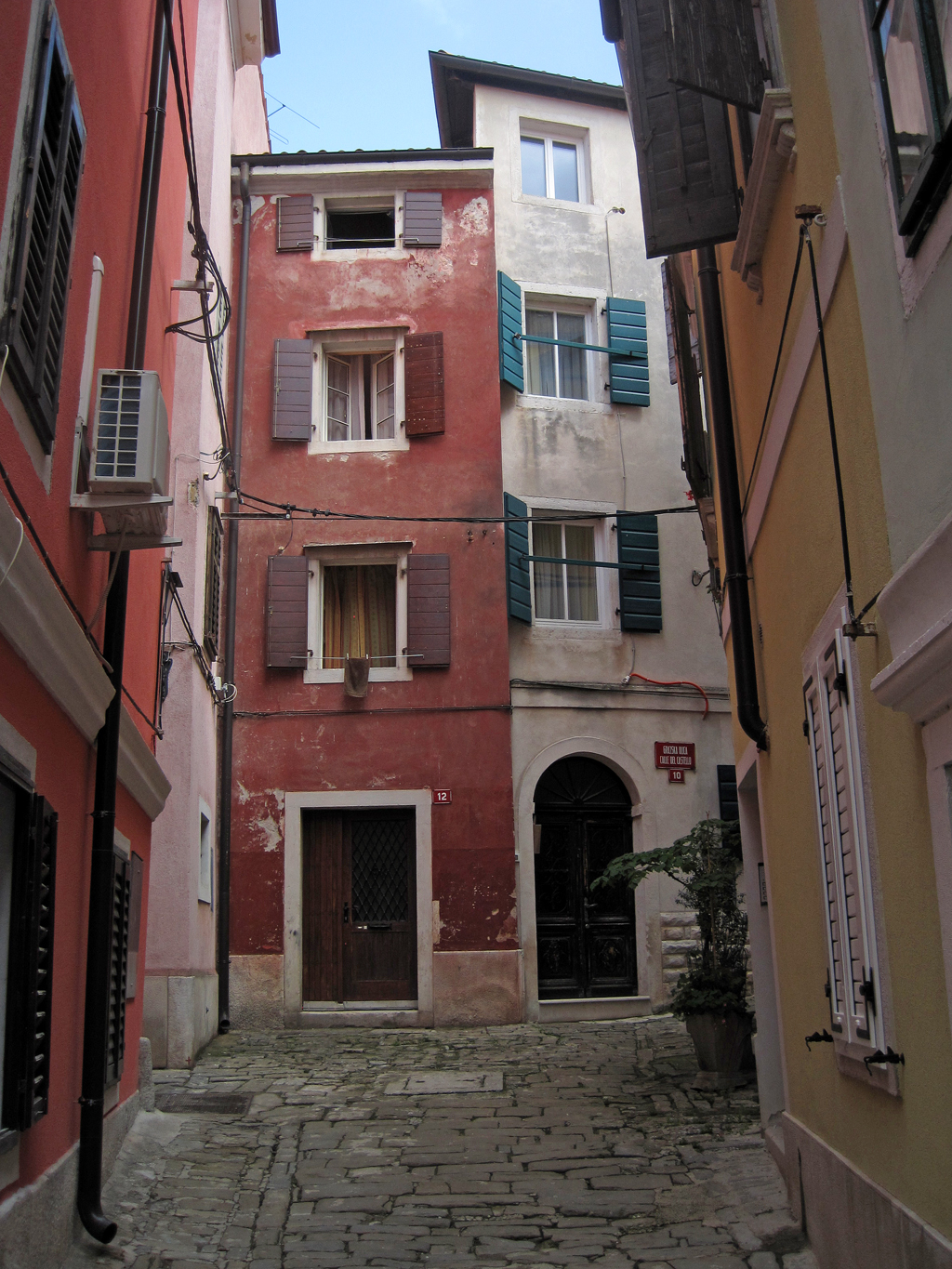
Piran was our consensus favorite stop of the trip. A tiny town on a peninsula that juts into the Adriatic, it’s the jewel of Slovenia’s short 30 km stretch of coastline. It felt like the Riviera, particularly given the Italian influences in the architecture, but only if that Riviera was run by Germans. The Slovenians seem industrious by European standards. We actually witnessed the closure of a restaurant at 9:30 on a Friday night, which is appetizer time across the Adriatic. Piran’s core is a delightful medieval maze that spills onto the main square, the marina and the seaside promenade that rings the town. Piran is small, and you can walk from one end of town to the other in 15 minutes or so. It has a laid-back vibe that made it easy to relax and enjoy the spring sunshine. Our B&B lent us bikes which we rode through the adjacent tourist town of Portoroz, sort of a Slovenian Myrtle Beach, and further to the Piran salt flats. Here, workers flood low-lying fields in the summer, letting the sun evaporate the water and harvesting the salt left behind by hand. The town provided a needed spot of relaxation in our admittedly ambitious itinerary.
piran marina

piran back street

piran square

Julian Alps, Slovenia

Fun fact: During World War I, Ernest Hemingway drove an ambulance in these mountains, which was the front line for vicious fighting.

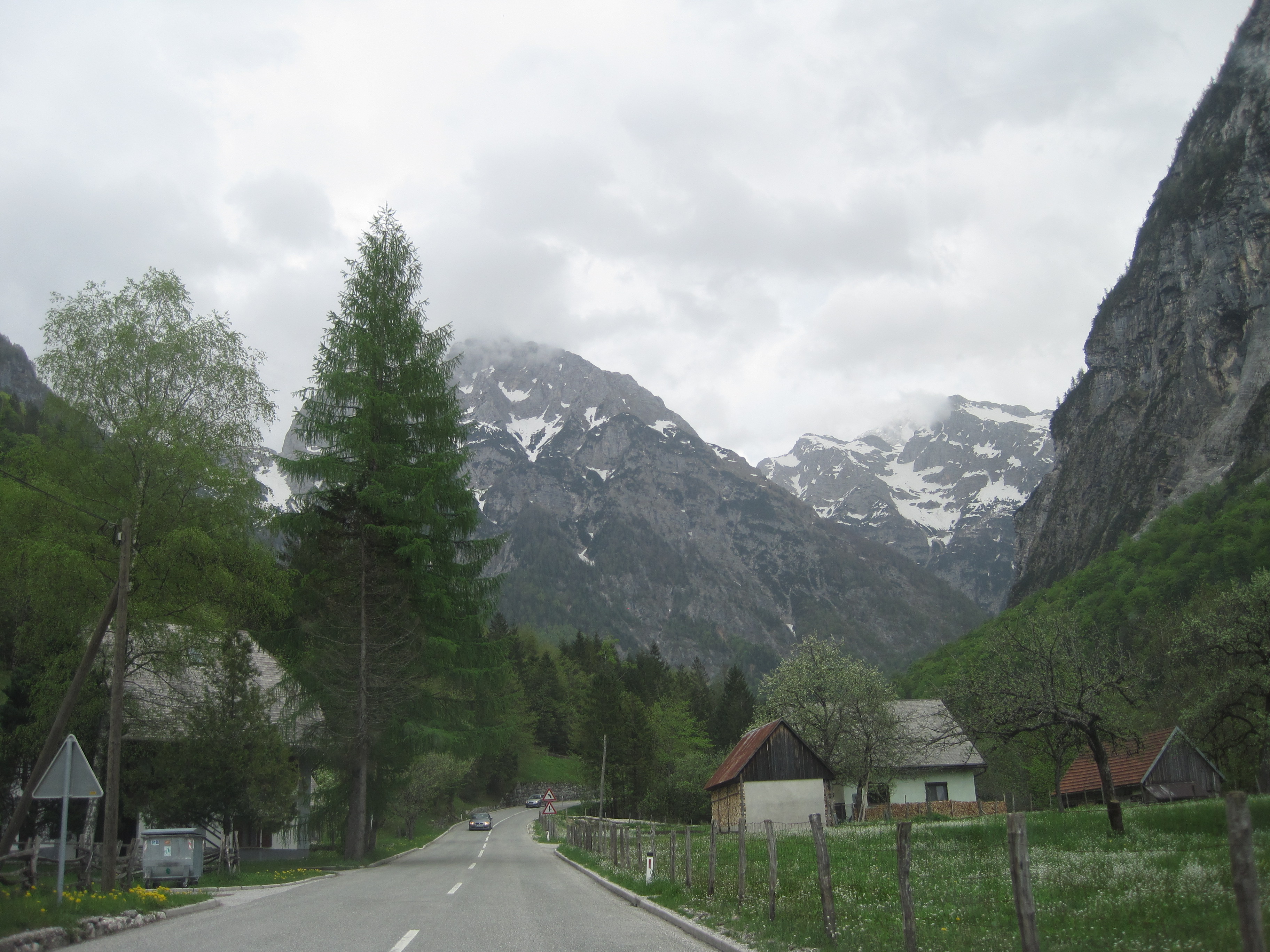
I’m a sucker for a good mountain, so we took the scenic route to our next stop, Lake Bled, by way of the Julian Alps, Slovenia’s small corner of that famous mountain range. We crossed the Vršič Pass, the highest pass in the country, which had only just opened for the warm months. The winding road to the peak has 48 hairpin turns that lead to ever more spectacular scenery as it skirts around Slovenia’s highest peak, Mt. Triglav, named for it’s three distinct peaks. The south side of the pass was sunny and scenic, but the temperature nose-dived as we climbed, and by the top there were snow banks taller than our car piled at the road’s edge. Colorful poles line the road to help plow drivers find the road in inclement weather. The backside of the mountain was stormy and cold, but no less picturesque. Apparently this road was built by Russian POWs in WWI, and there’s a small onion-domed wood church on the way down that commemorates a group of them that were killed in an avalanche. While less impressive than Swiss or Austrian Alps, these mountains were well-worth a three hour detour.
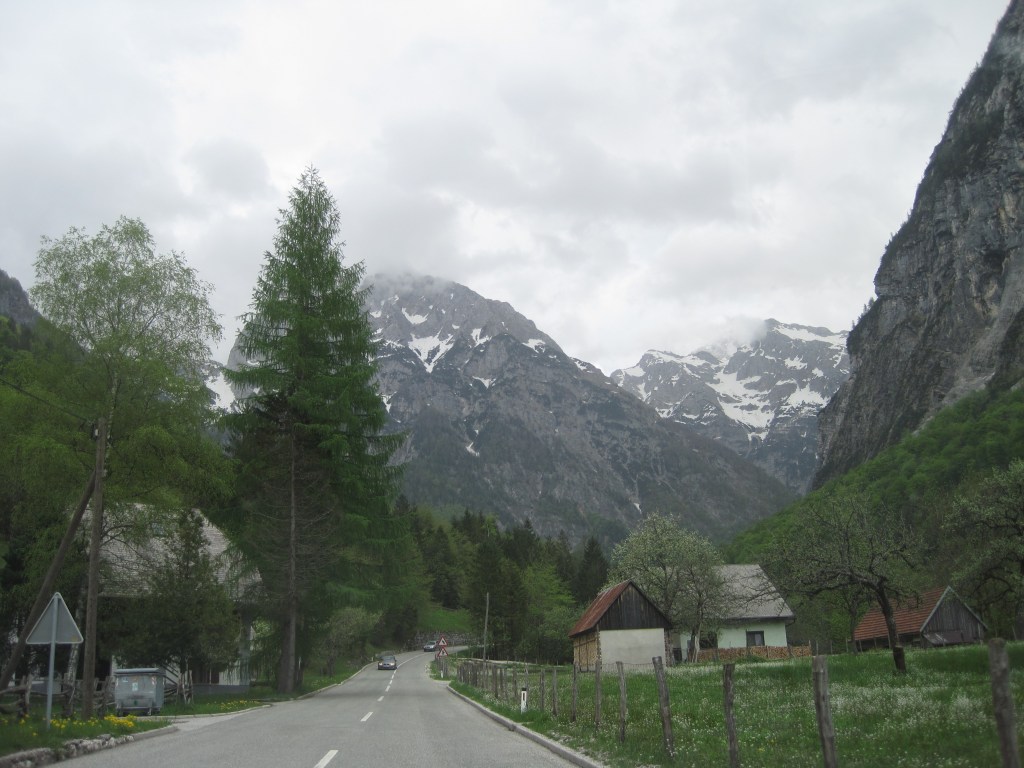
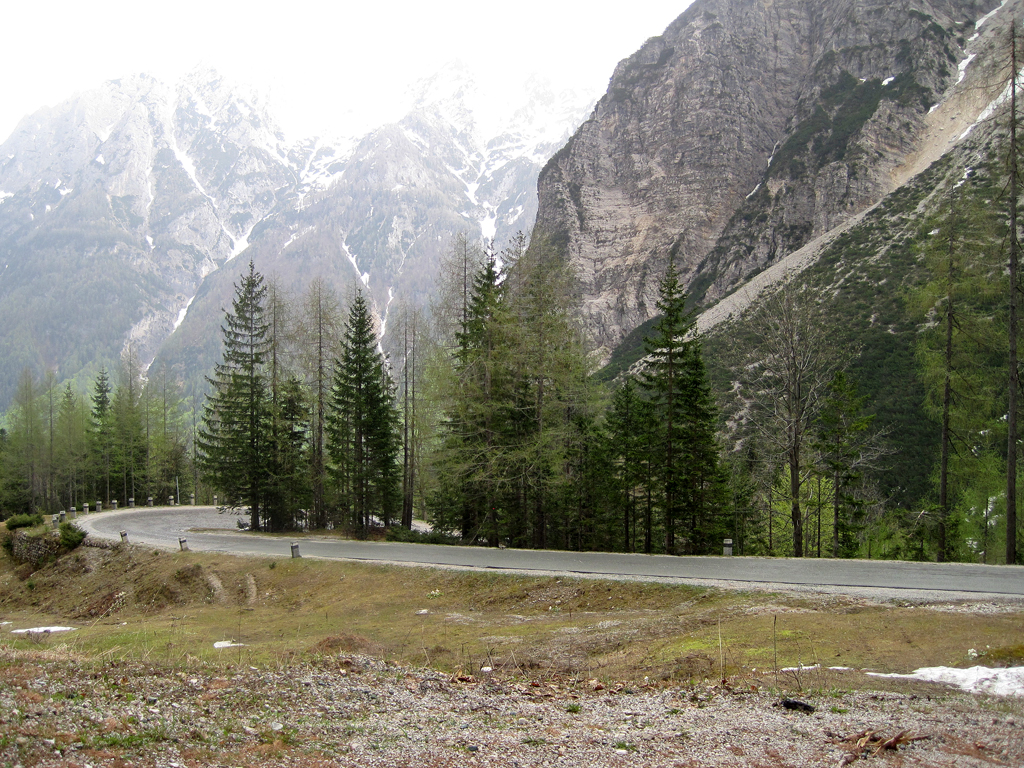
IMG_0538

vrsic pass

Lake Bled, Slovenia

Fun fact: Slovenian grooms run their brides up the long set of stairs on the island in Lake Bled to prove their worthiness for marriage.

We generally find Rick Steves’ guidebooks to be reliable in their assessment of various European destinations, but Weezie and I both felt like Lake Bled was significantly overhyped. Yes, it’s beautiful, and no, you shouldn’t miss it on a trip to Slovenia, but we only derived a half day’s entertainment from the place. The lake is guarded by a castle and set against the backdrop of the nearby Alps with a fairytale-like island in the middle. The three hour hike around the lake inspires you to take a picture of the same view every 50 meters or so. The surrounding town is mostly dominated by pensions and B&Bs for vacationing Europeans and adds little to the visit. The highlight was our trip to the church-topped island. We elected to avoid the traditional gondola ride, and got there under our own power using a rented rowboat. Once the vendor reminded me that you can’t row facing the front of the boat, we got underway and found ourselves at the island’s shore within 20 minutes, despite my cringe-inducing rowing form. Weezie gave it a try on the return trip, and I’m certain that plenty of Japanese tourists are sitting at home giggling at their pictures of the little white girl being forced to row her man across the lake. Lake Bled is probably best when used as a jumping-off point for outdoor adventures in the nearby mountains.
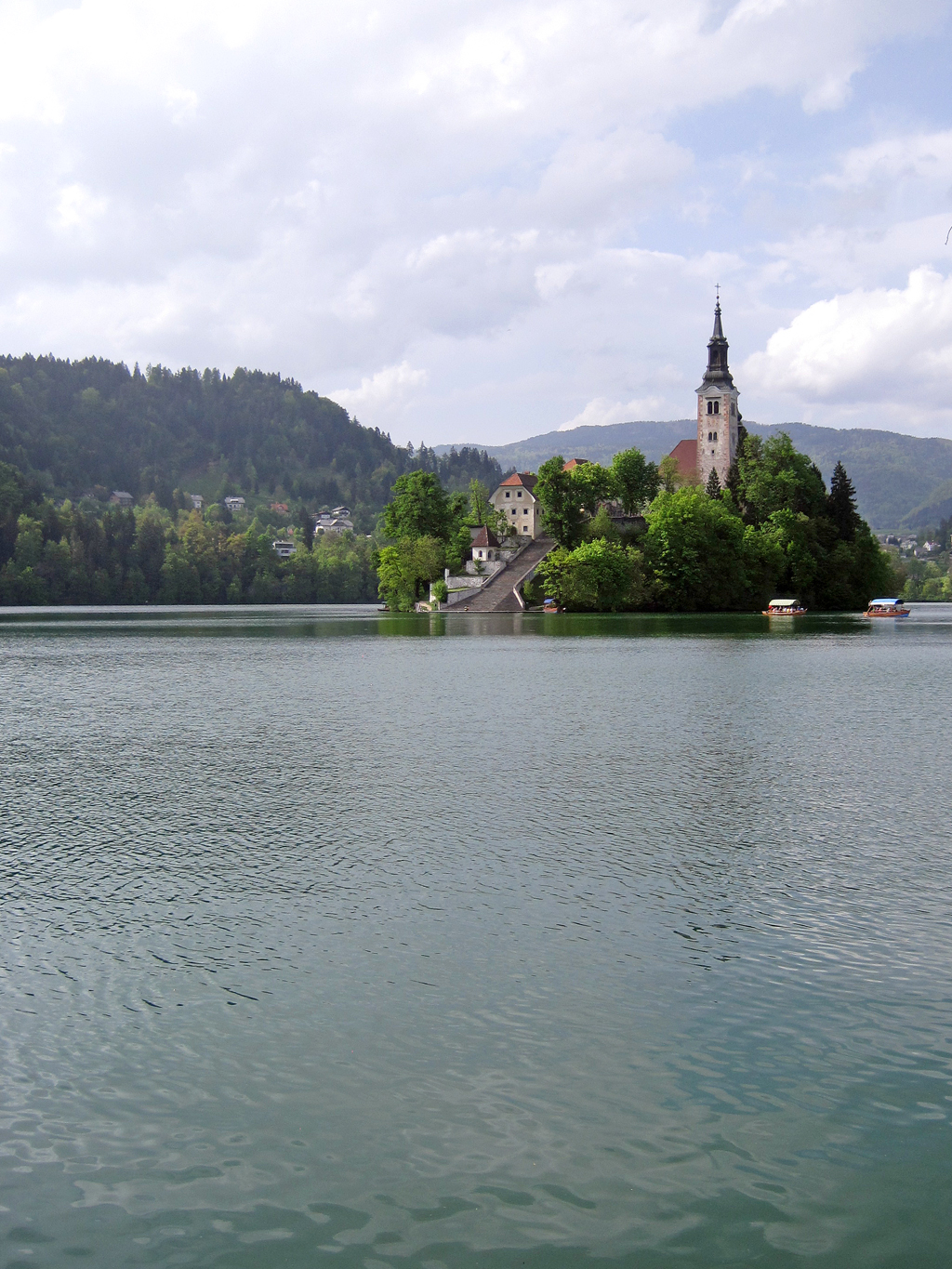

bled island

rugged

weezie rows

Ljubljana, Slovenia

Fun fact: They say that the tails of the dragons on Ljubljana’s famous Dragon Bridge wiggle when a virgin crosses it.

The town with the name that no English speaker has ever gotten right on the first try (L-yoo-blee-ahna), Ljubljana is like a miniature Vienna, not surprising since it was under Hapsburg rule for centuries. It’s minuscule compared to other European capitals, but that makes it easy to digest in a day or two. The town center has been beautifully pedestrianized by its former mayor, and the city’s best activity is to wander the side streets and roads lining the river. The sprawling modern part of town is uninspiring and there is little in the way of museums, so the pouring rain made it a little difficult to entertain ourselves after awhile. The best thing we did was the “free” tour of Ljubljana, led by an English-speaking guide with an encyclopedic and entertaining knowledge of her hometown. Though the tour is free, it’s good enough that you’ll want to donate a decent sum by the end of it.  The morning of our departure, we took a breakneck shuttle ride to the laughably small airport and began our three leg journey home.
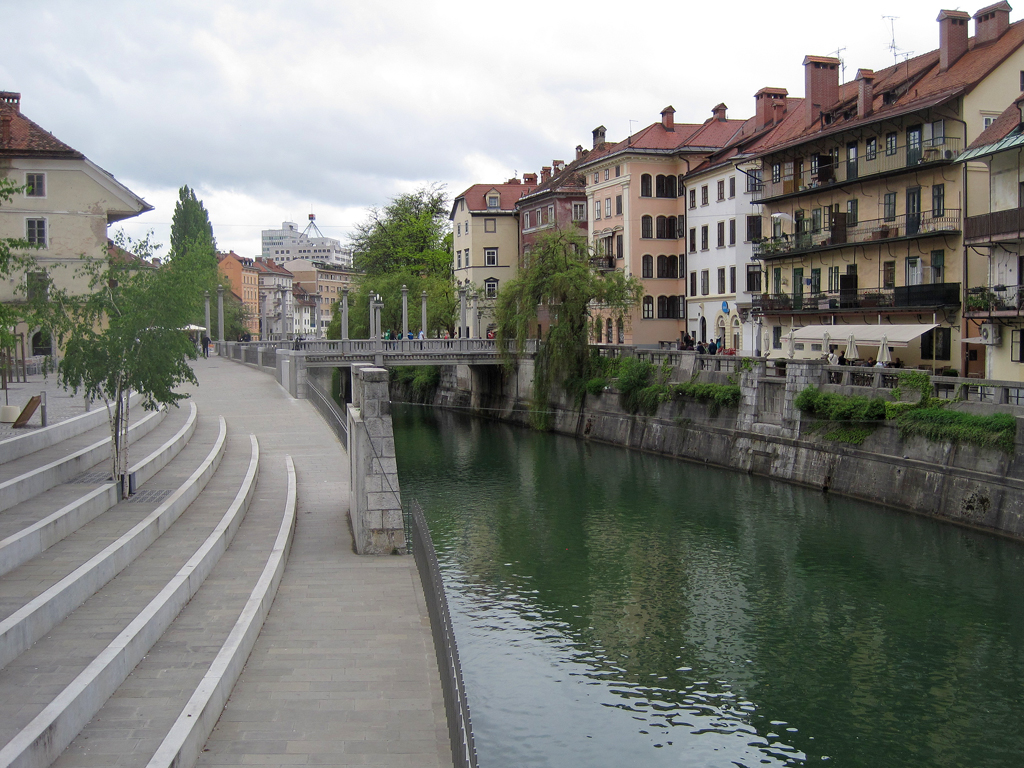
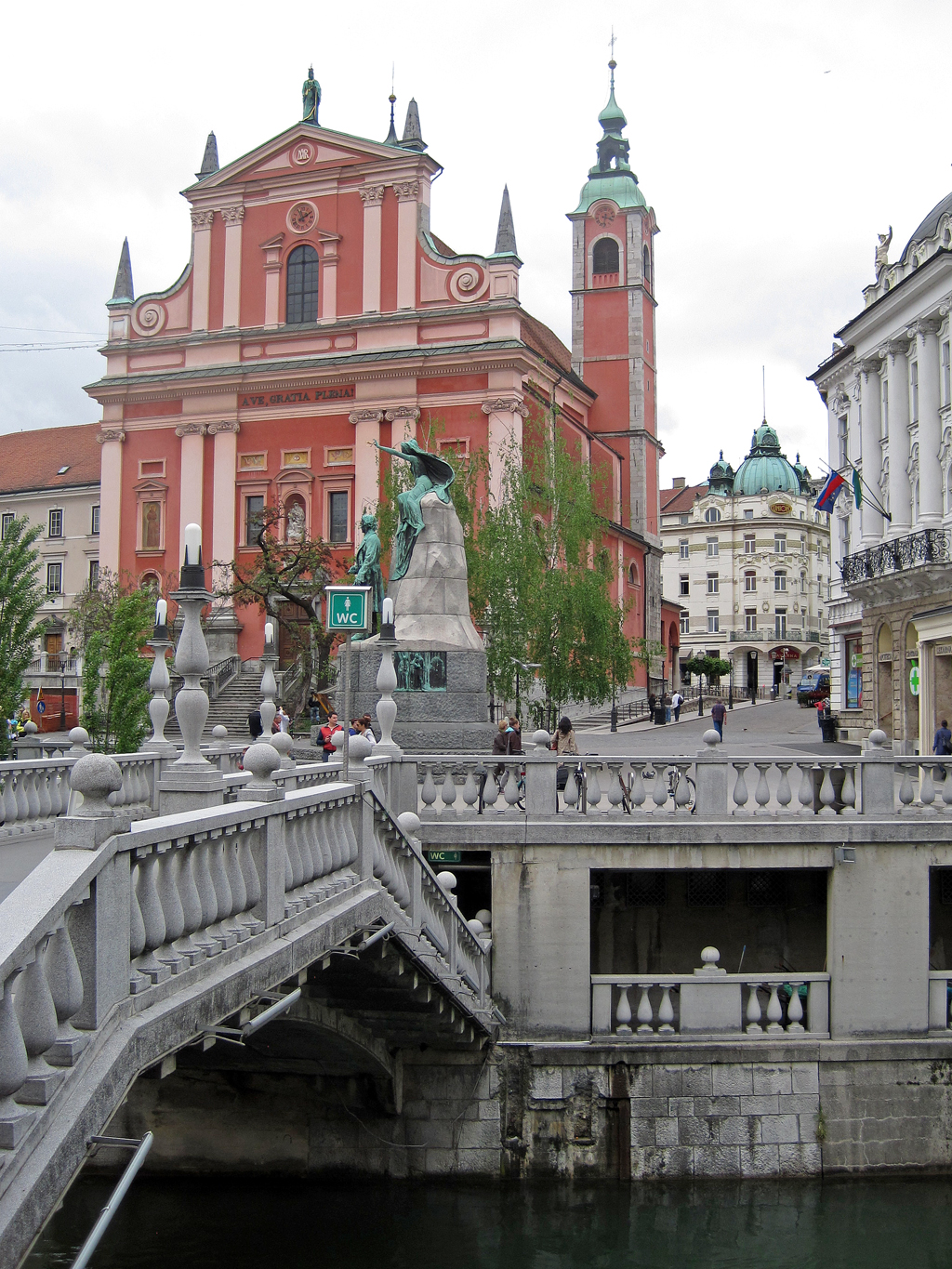
ljubljana street

triple bridge

All in all, the Balkan countries seem to have mostly shaken off their ugly past and have as much to offer as any of their Western European counterparts. We both look forward to a return visit, mainly to explore more of Croatia’s stunning coastline. And that, folks, is where we’ve been and why you haven’t heard much about house projects lately.
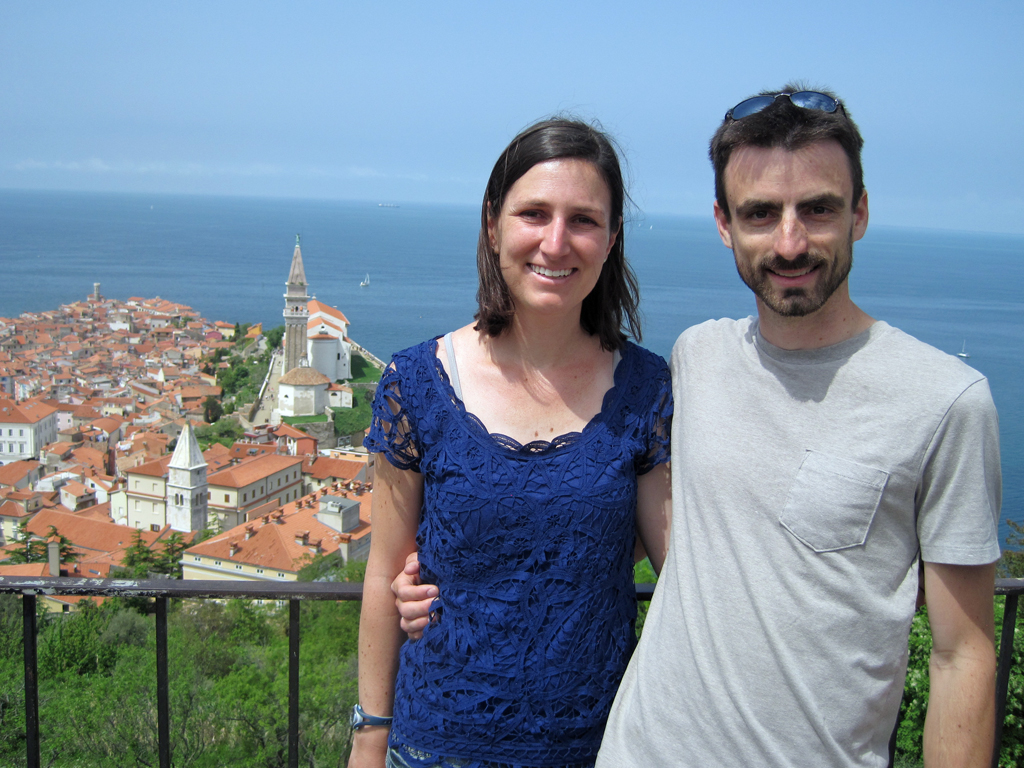
couple in piran

Weezie’s pupdate

Since I’m in charge of canine acquisition and well-being in this household, and since it’s been a while since you’ve heard from Louis and even longer since you’ve heard from Meg, I thought you might like to hear how they’re doing.

Dogs snuggling

Meg had a rough winter. In late January, her tranquil home was invaded by a 5-pound monster (Louis) who liked to bite her ears and disturb her naps. She went from getting 23.5 hours of sleep a day to only 23.25 hours. Then in early February, she was bitten by a rheumy-eyed Boston terrier and developed a lip abscess. About two weeks later, we got heat. That same day, she was so overjoyed that she took a frolick in a nearby field and tore her other ACL. For those of you who don’t believe Meg can frolick, here’s proof from back in January:

All the antibiotics she received for the abscess and the ACL surgery, not to mention the piece of rawhide she ate whole, led to a six-week bout of GI distress from which we are only just emerging. On the bright side, the ACL tear did mean that we had to separate her from Louis, so she’s now much better-rested. Reid thinks she tore her ACL on purpose for this very reason. She does like her sleep. She’s completed her rehab now and even frolicked (cautiously) a couple of weeks ago. Here’s hoping she has an uneventful summer.

Louis is thriving. Up to 17 pounds from 5 when we got him less than four months ago, he enjoys chewing just about everything: cigarette butts, dead baby snakes, rocks, dead squirrels (he’s found two), Meg’s ears, pants legs, stairs, doors, books, fingers – you get the idea. He’s mostly potty-trained. Meg’s ACL tear, and the fact that we came home to a puddle and a pile every day for a month, meant that we finally stopped ignoring everyone’s advice and crate-trained him; it really worked. Training in other ways has not gone as well, and he thinks the word “no” means “let’s keep playing this super-fun game.” He also loves doing figure-of-eights around the yard and fighting with rakes:


He loves everyone he meets. (I apologize to those of you whom we’ve encountered on our walks whose fingers he’s chewed. He seems to be growing out of it now that his adult teeth are in.) Over the last few weeks, he’s started turning orange. I wonder if that’s a sign that Jacques approves of him. I hope so.

Wisteria wars

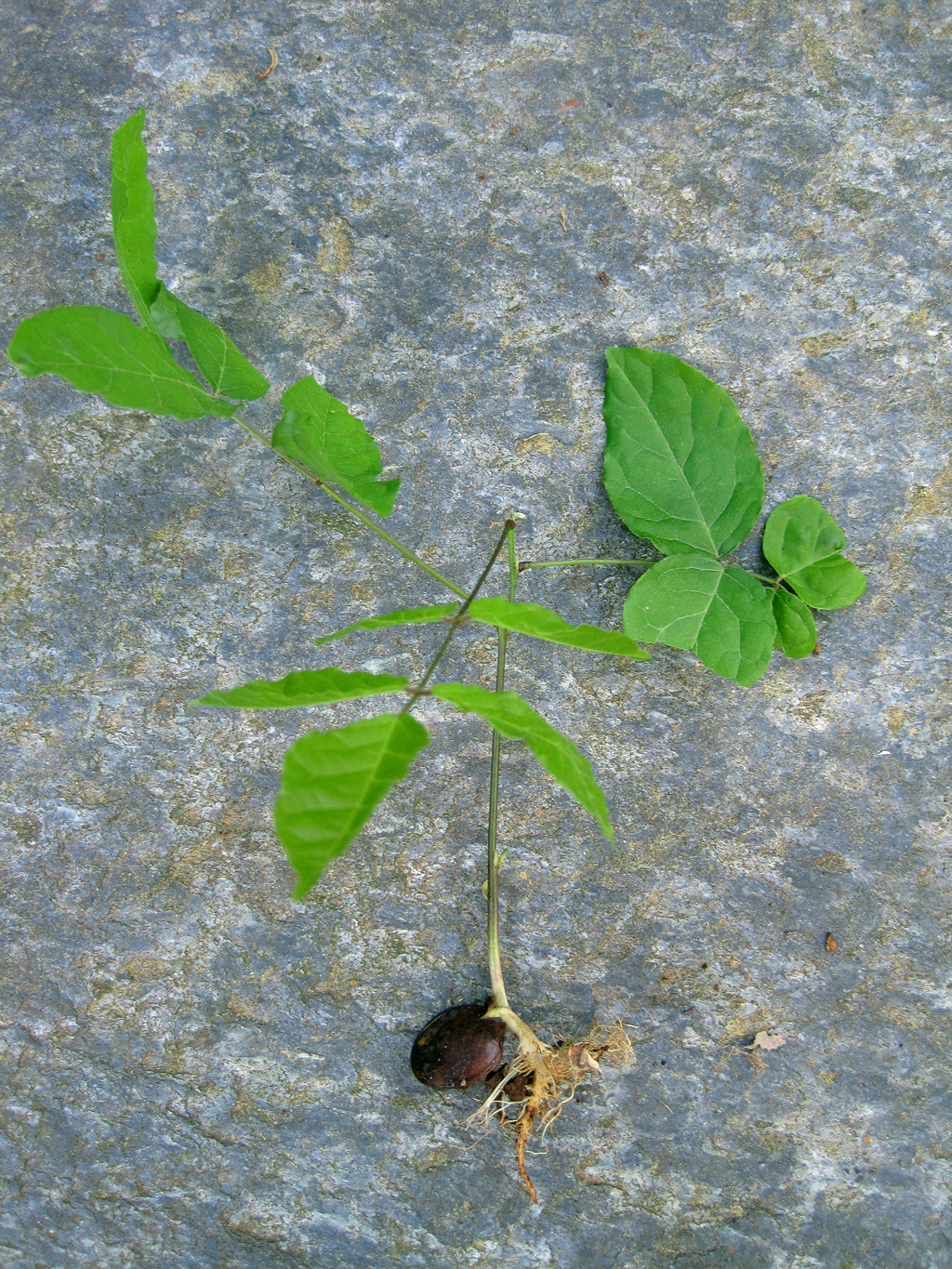
The yard of the Ordinary House has been owned by wisteria for years. I cut one vine last fall that was nearly 8 inches in diameter at its base. It’s an absolutely beautiful plant while it’s blooming in the spring, but it gets out of control fast and is nearly impossible to eradicate completely. I didn’t reach all our vines before they produced fuzzy seed pods that fell to the ground, dried up and deposited nickel-sized seeds all around the yard. I figured that a handful of the seeds would sprout come spring, but baby wisteria plants are popping up everywhere. The photo below is proof of how tenacious wisteria’s grip on your landscape can be.

wisteria sprout

I estimate that the plant pictured here is less than a week old. In that time, the seed has sent out a thick, well-developed root system and three clusters of leaves. When you see this, it’s easy to imagine how a vine can grow to eight inches think and extend to the top of a 50-foot tall tree. I’ve also learned that you can’t casually fling wisteria cuttings to the ground. Nearly any portion of the plant seems to be able to take root if it comes into contact with bare soil. I managed to get the bulk of the vines cleared, but I expect the last 10% to linger for years before they’re completely gone.

Espalier vous?

While this year’s gardening tasks will be mainly aimed at keeping the vegetation in check, it’s hard to resist popping a few new plants in the ground during these warm early-spring days. And while I’m no green thumb, I’m no less ambitious in the garden than I am in the house. I tapped this enthusiasm recently and started a long-term project that I hope will eventually bear fruit – literally.

I started with this beautifully aged brick wall that edges our terrace:

brick wall

I drilled some holes in the wall:

brick drill holes

I stuck some lead anchors in the holes:

lead anchor brick wall

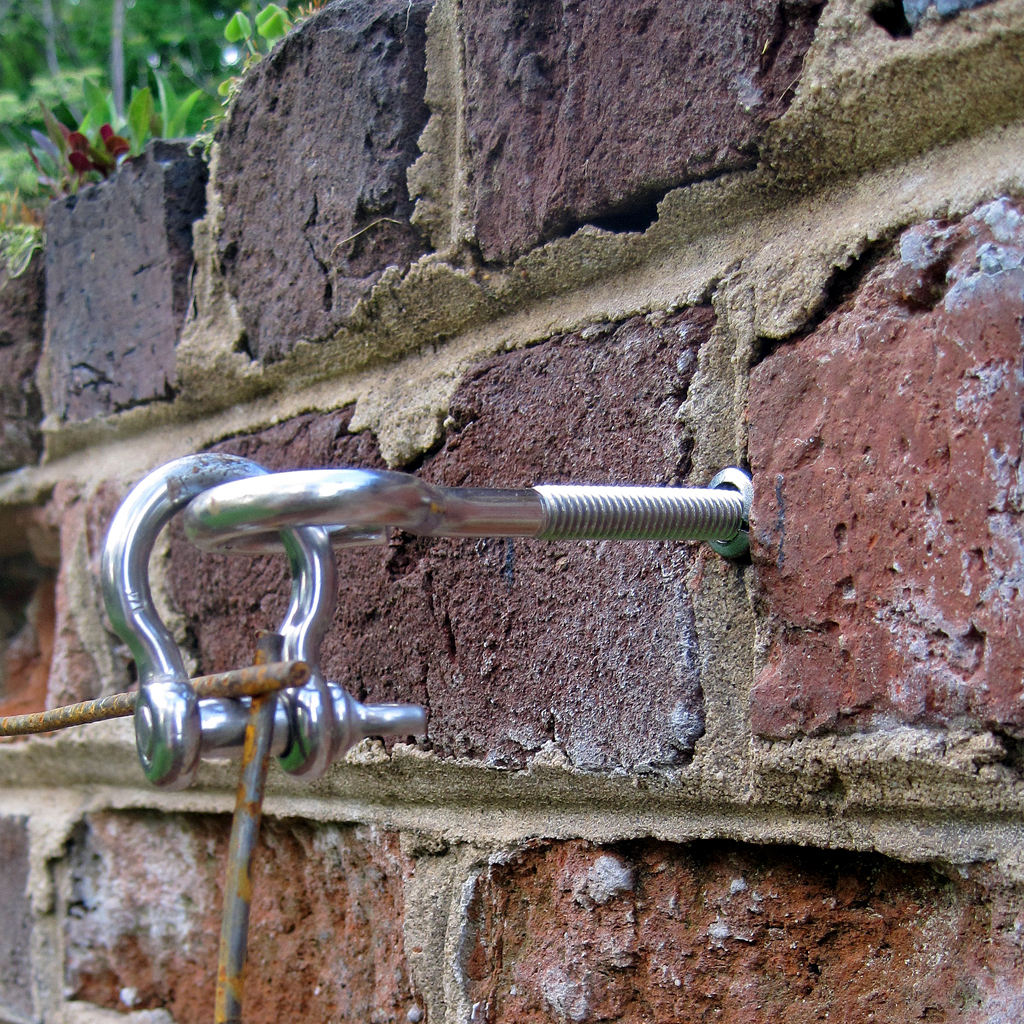
I screwed a stainless steel eye bolt and shackle into the lead anchors:

eye bolt and shackle

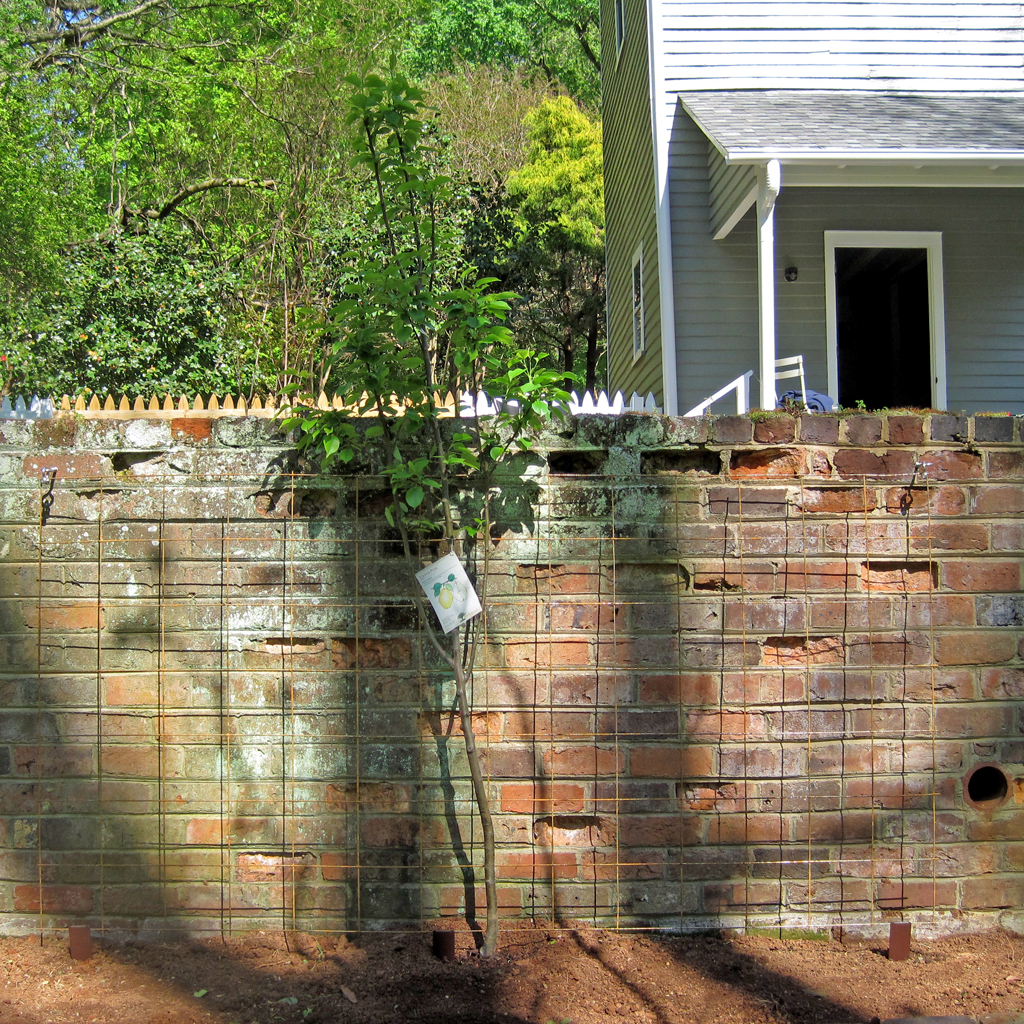
From the shackle, I hung a section of concrete reinforcing mesh and planted a Kieffer pear tree just in front of it:

espalier

And then I chopped the top of the tree off:

espalier begins

I know you’re probably thinking that I’m really missing the point of this whole gardening thing.  But if all goes well, in the next couple weeks new shoots will form on the tree’s trunk just below the cut.  While the shoots are still pliable, I’ll bend them and tie them off to the metal mesh. And after a few years of attentive pruning, I’ll end up with an espalier (ess-pal-ee-ay) tree.

Espalier is the art of growing plants in a formal pattern against a wall or other structure. The technique was perfected in the Middle Ages as a way to maximize fruit production in small spaces, particularly in the cool climates of northern France and England. The wall retains the sun’s heat, lengthening the tree’s growing season and ripening the fruit more quickly. Espalier was also popular in America in Colonial times, with many fine examples on display in Williamsburg.
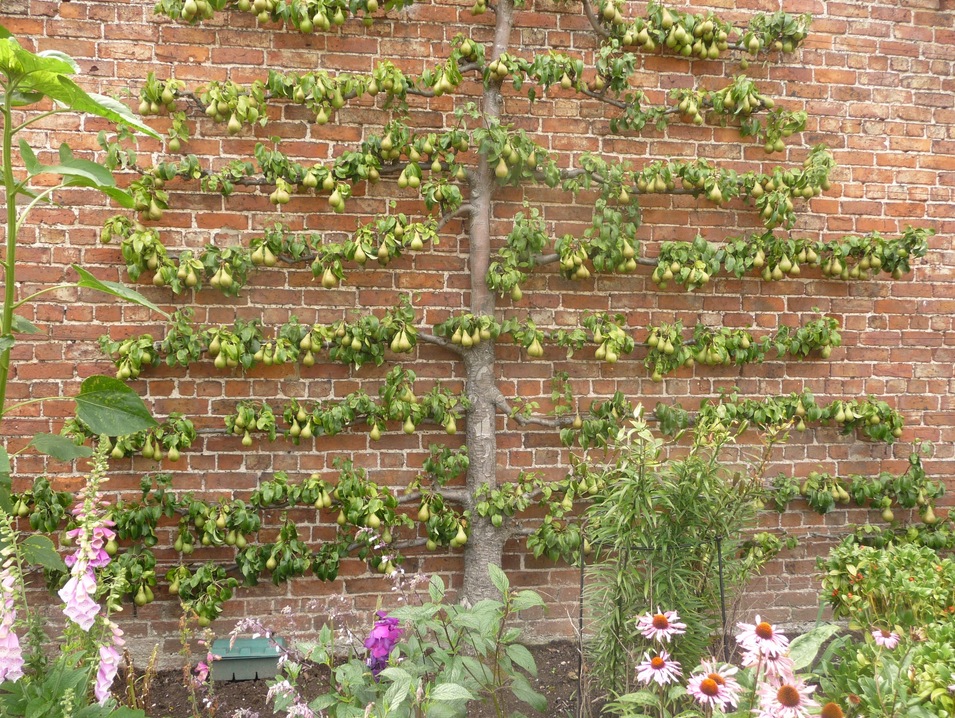
My tree will eventually have three horizontal tiers, or cordons. In my dreams, someday it’ll look  like this:

pear espalier

This is not a good project for those who need instant gratification. It’ll take three or four years to fully shape the tree, but ultimately I think the effort will be worth it. Especially when I can pluck a juicy pear directly from a branch just outside the back door.

Ordinary archaeology #001

The most interesting thing about old houses are the stories that they tell and the secrets that they reveal as you get to know them.

Last weekend, I removed our old electrical meter and the conduit that connected it to the breaker panel in the basement. These components became obsolete when we upgraded our electrical service this winter. Because the conduit had been painted over umpteen times, a relatively clean cross section of paint colors was revealed when I yanked the tubing off the wood siding around back.

As you can see in the photo below, it turns out that the new siding color is remarkably similar to another color used on the house many decades ago. That earlier color is a darker, more forest-y green than the gray-tinged “Link Gray” that we used on the siding.  Even so, I find it fascinating that other owners had similar ideas about which hue best suited the house. Since then, various shades of light gray seem to have been the color of choice.

Another fun fact: see that block of wood posing as a brick just below the siding? Nowadays when contractors talk about “blocking”, they’re referring to pieces of wood concealed in walls to provide attachment points for wall-hung materials or equipment.  But the origin of the term are wood blocks like these, buried in a brick wall, to provide secure anchoring points for wood windows and doors. Neat, huh?

paint match

Jewelry for houses

Shutters are like jewelry for houses.

They serve a myriad of useful purposes when they’re functional. A closed shutter blocks searing sun, howling winds and pelting rains, insulates in the winter and deflects prying eyes year round. Stroll through nearly any Mediterranean village and the shutters on the buildings express the rhythms of daily life, the weather, and the mood of the people inside. I envy the European appreciation for shutters, because ours have largely been replaced by non-functioning replicas of the real thing. Done right though, even non-functional shutters add a layer of decorative detail and texture to a house that’s hard to achieve otherwise.

nimes

Our home was not spared the indignity of a fake shutter installation during its long life. When we bought the place, the shutters were screwed directly to the window casings. Unfortunately, this is the typical installation detail for shutters these days, and is so ubiquitous that it seems normal. When our shutters were removed to be painted, I vowed that they would not go back up unless we did it the right way.

By “right way” I mean mounting the shutters so that they appear functional, even if they aren’t. The windows on our house are protected by aluminum storm windows, which prevent shutters from closing fully. Even so, we invested in cast iron shutter hinges to mount the shutters back to the house. These L-shaped hinges provide a number of benefits over the typical screwed-on shutter installation. They push the shutters off the house, allowing for ventilation and drainage behind the shutter and reducing deterioration of the paint there. They make removal of the shutters a simple matter of lifting them off, rather than tediously unscrewing them. This will make future paint jobs easier. And lastly, the raised mounting position casts deep, attractive shadows on the face of the house, an aesthetic side effect that’s lost when shutters are screwed directly to the siding.

shutter hinge

The other piece of essential shutter hardware are tie-backs or shutter dogs. These pivoting metal plates hold the shutters open and keep them from moving in the wind. Shutter dogs come in a huge variety of shapes and sizes, from the familiar S-shape to intricate cast seashells. For our house, I selected a tapered tieback with a curled bottom edge. This simple shutter dog seemed suited to the subdued colonial architecture of our home.

shutter dog

Aside from the absence of shutter hardware, shutter installations are marred by a number of common faux pas. Attention to a few obvious details can mean the difference between a beautiful and convincing shutter installation and one that is clearly fake.  Among the rules to observe:

  • Install shutters with a size and shape that would allow them to cover the window opening fully when shut. This sounds obvious, but drive around nearly any neighborhood and count how many five foot wide picture windows you find that are flanked by twelve inch wide shutters: you’ll need more than two hands.
  • Install shutters so that they’d fit tightly in the window opening. Shutters installed this way will sit on the window trim, not on the siding. While you’re out counting wide windows with skinny shutters, observe how many of those shutters sit on the siding next to the window trim, not on it. You’ll to run out of fingers and toes.
  • Install  louvered shutters with the leading edge of the louvers facing up and out when they’re open. This way, when shut, the louvers would drain water to the outside, away from the window. Since most shutters are permanently affixed in place, it’s surprising how many people think the this mounting orientation is backwards. In fact, almost every vinyl shutter out there is manufactured with louvers that shed outward in the “open” position.
  • Install shutters on both sides of the window opening even if there’s something in the way, like a chimney. If the shutter doesn’t open flat to the house, that’s okay; that’s part of the appeal of a real shutter installation. Half of a pair of shutters never did a window any good.
  • Install shutters at every opening.

That last rule is the only one that we didn’t observe. For now, we’ve only mounted shutters on the King Street side of the house. Over time, I hope to put them at every opening, as they would have been in the past. Until then, I’m pleased that even if our shutters can’t close, they could.

shutters2

Pretty ordinary #007: Belated Happy Easter edition

daffodil

As anyone living in the southeast can attest, spring has not sprung this year. But you can tell that as soon as Mother Nature gives us a string of 70-degree days, the world is going to turn the color of Kermit the Frog and Claritin will be in short supply. I try not to wish away the crisp mornings and evenings, knowing that it’ll be ugly hot before too long. Despite the cool weather, a few hardy flowers are making their presence known around the Ordinary House with colorful displays of petals and pistils. It won’t be long now.

white flowerspurple flowers


Before tour: the dining room

Our dining room is less notable for what it is (the mostly empty room we pass through on our way from the living room to the kitchen) than for what it will be – a showcase kitchen. When Weezie and I were thinking about buying the house we learned that two of its quirks were deal-breakers for most potential purchasers. The first was its notable lack of central HVAC. We fixed that. But they also pointed to the the tiny, outdated kitchen that’s down a set of steps from the main living level. Aside from the obvious challenges this arrangement presents for anyone with mobility issues, it makes the space feel remote from the living room, where we spend most of our time. We’re gonna fix that, too.

I’m not one to toot horns, but I had the kitchen location problem solved before the end our first viewing. The solution was clear as day – move the kitchen. Duh. To find its new home, I didn’t have to go far. The dining room, just up those aforementioned steps from the existing kitchen is the perfect spot for our kitchen-to-be, just off the living room. And since we do all of our coming and going by way of the existing  kitchen, the room is well situated to transform into a mudroom once it’s no longer needed for cooking microwaving. We’ve just started planning this exciting project and hope to get it under way this summer.

Located in the “new” 1870s portion of the house, the dining room is sizable and well-suited to the large formal gatherings we have – well, never. The room swallows the little round table we dragged from our last house. On the east wall, a large picture window flanked by two skinny double-hung units looks out to the side yard and across Cameron Street.

dining to living

On the north wall is the door to the kitchen and a huge, built-in buffet. Right now, its shelves are home to all of our books. A panel over the kitchen door provides access to an unexpectedly tall interstitial space between the ceiling of the kitchen and the floor of the master bedroom above.

dining buffet

The west wall begs for a window, but is blank except for a fascinating hand-hewn post, whose location and configuration confound everyone who encounters it. The post appears to have accepted a pegged diagonal brace, now absent, but I can’t sort out why that was ever necessary in this location. The joinery is old school craftsmanship at its finest, and it’s a fun conversation piece for visitors interested in the history of the house.

pegged joint

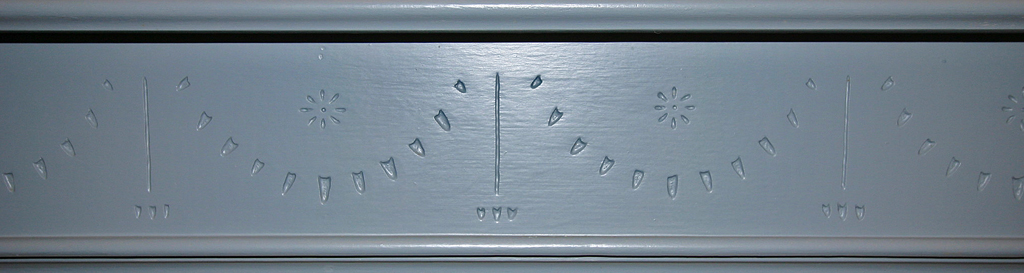
The volume of the ground floor bathroom bumps into the southwest corner of the room. Originally, this bathroom was part of an inset porch that had a back door into the living room, visible in an old photo I included in my post about that room. The entire space is wrapped with an elaborate carved chair rail that was copied from the stair hall trim of a North Carolina plantation house reconstructed in the Winterthur museum in Delaware.

chair rail

Lovely as the dining room is, I’m anxious to see it reborn as the 21st-century heart of The Ordinary House. More on that soon.

Junk in my sump

Sometimes when you have an old house, you spend the first 75-degree day of spring in a dark corner of your basement because your sump pump’s busted. And if you can’t manage to derive at least a sliver of satisfaction from this thankless repair task, you’ll end up wearing a straightjacket and a drool bib in no time.

Our basement has two sump pits. There are no obvious water issues, but it’s nice to know that if we find ourselves in the eye of the next Atlantic hurricane I won’t have to pull out my pool noodle in order to make my way around down there. Week-to-week, the sump pits collect waste water from the washing machine and utility sink and pump it into the main sewer line.

After running a load of laundry last week, I noticed a puddle of bubbly overflow adjacent to one of the pits, a sure sign that the pump wasn’t working. I rolled up my sleeves, fished the pump out of the soapy water and found that it was hopelessly clogged with debris. When the boiler was removed last month, it left an unholy mess of rust scale, dirt and oil in its trail. I suspect that a good amount of this detritus found its way into the uncovered sump pit where it was sucked in to the pump, eventually causing it to seize.

busted pump

To prevent the new pump from suffering the same fate, I fetched my Shop Vac and make quick work of the water and sludge at the bottom of the sump.

junkless sump

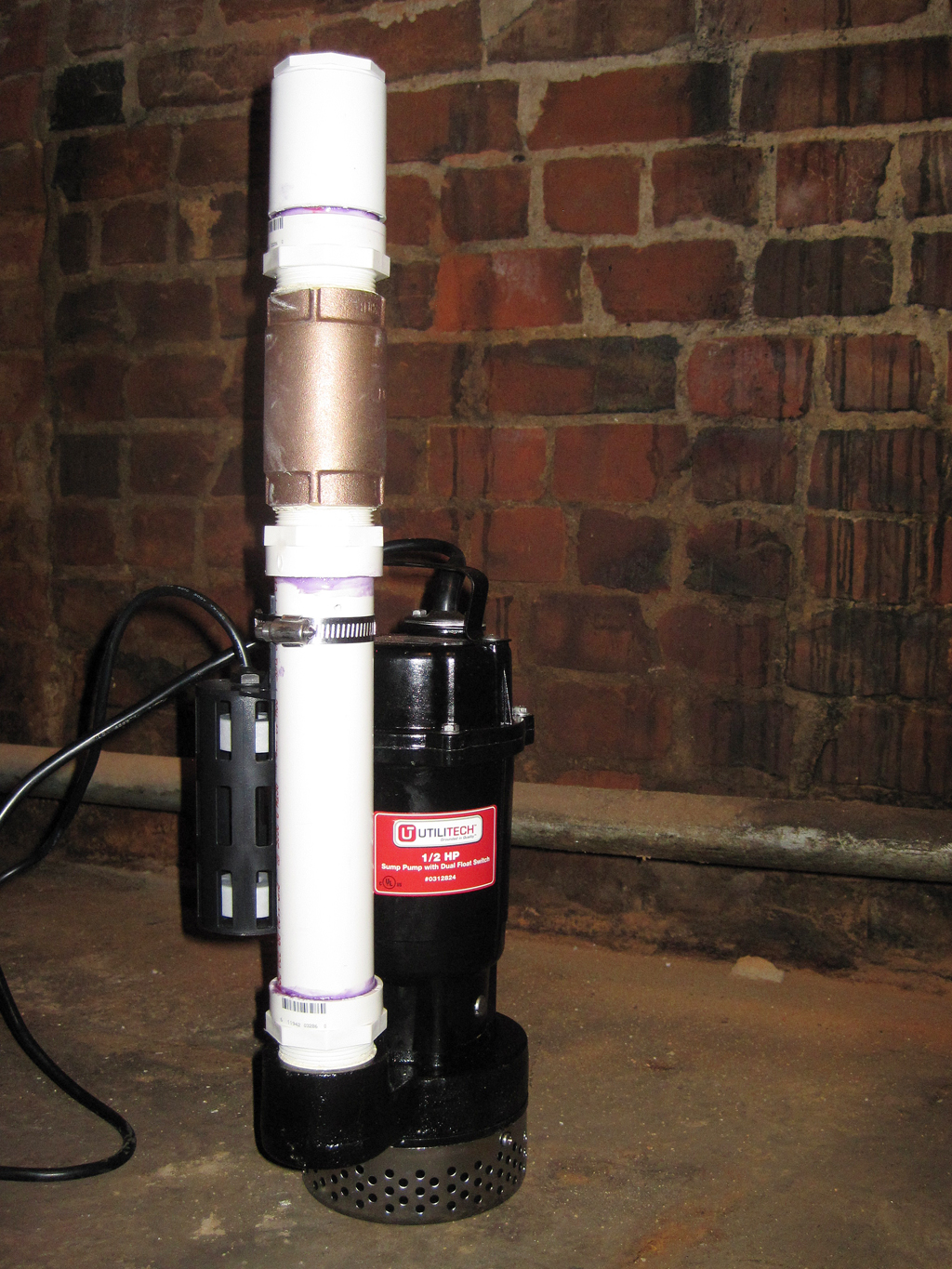
Next, I assembled the discharge plumbing to the new pump, a slightly more powerful model made of cast iron and aluminum rather than plastic. The black plastic cage strapped to the PVC pipe is a vertical switch that activates the pump when a little float inside it gets pushed up by rising water. The dead pump had a tethered switch which is similar to the floating ball you’ve seen in your toilet tank. Because the sump is small, that switch had a tendency to get caught on the sides of the pit, causing the pump to activate later than it should have. The vertical switch can’t get snagged, so it should be more reliable. The brass fitting is a check valve that keeps pumped water from flowing back into the pit once the motor clicks off.

sump pump

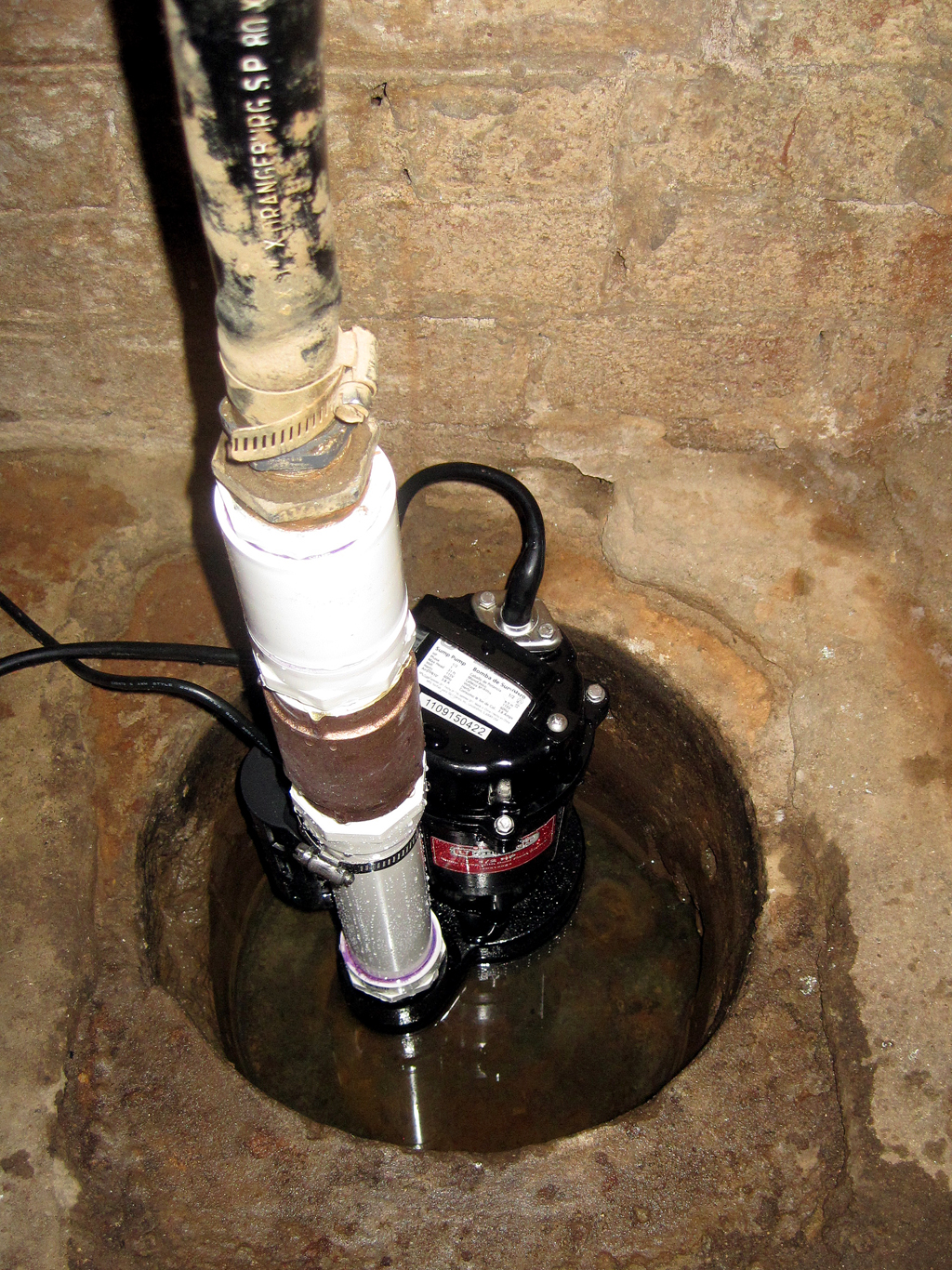
The plumbing assembly is topped by a threaded bushing that connects to the existing flexible discharge pipe. The end product looks straightforward, but even with years of DIY plumbing under my belt, I rarely manage to pull off a plumbing project with fewer than three trips to the hardware store. I think this was a four-tripper.

To test the pump, I dumped a five-gallon bucket of water into the sump and it disappeared as quickly as I could pour it. I’d be delighted to not to think about this pit ever again – or at least for a very long time.

finished sump pump

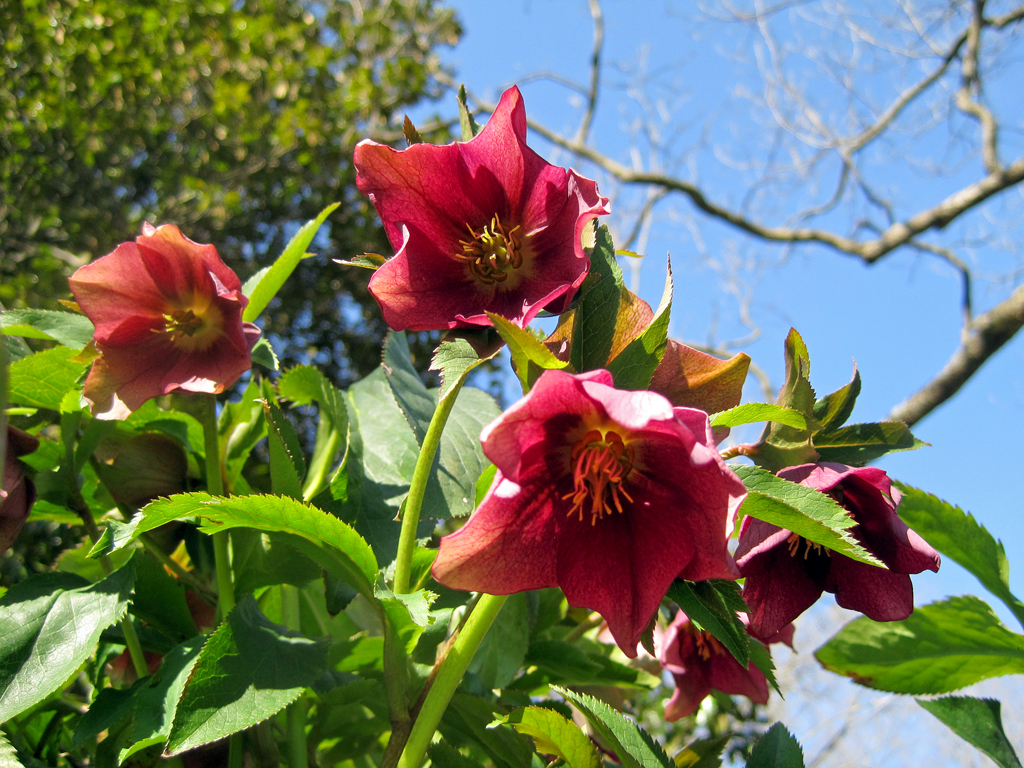
I did manage to salvage the afternoon to enjoy the weather and admire the early-spring flowers blooming around the yard. These hellebores have been putting on a show for several weeks and don’t show any signs of letting up.

hellebore