Skip to content

1 year!

One year ago, on a sweltering and stormy Saturday afternoon, our movers loaded the last of our furniture into their truck, and we made the short trip from Chapel Hill to Hillsborough for the last time. After months of dreaming, negotiating, packing, and waiting, we could finally declare ourselves honest-to-God “Hillsburgers”.

It was a funny transition, moving from a tiny bungalow that I completely renovated, with a kick-ass kitchen and a brand-spankin’ new screened porch, to a leaning, un-airconditioned, pre-Revolutionary showpiece in desperate need of a paint job. As an architect, I spend my days identifying potential, and if there’s one thing this place has, it’s dump truck loads of potential.

Houses don’t make it to their 250th birthday if there’s not something intrinsically appealing about them. The Ordinary House is dead simple, and very American. It’s the house kids draw when you ask them to draw one – a gable roof, an end chimney, and a centered front door. It doesn’t wow with ornate decoration or extravagant size. Instead, its pleasing proportions and simple materials are assembled in a way that is timeless and appealing.

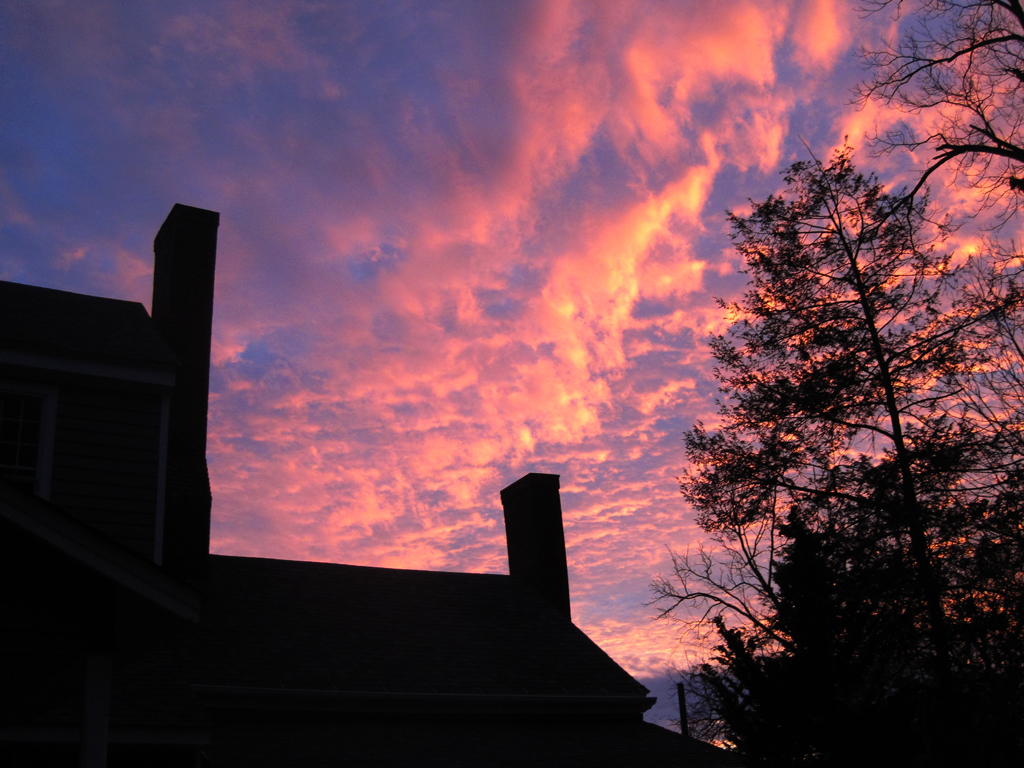
house silhouette

In some ways, it was a difficult year. Shortly after moving in, one of our dogs died and the other tore her ACL, waiting only a few months to tear the other one. Our boiler quit just before Thanksgiving, leaving us in the cold until we were able to install central heat in late February. Squirrels took up residence in our attic, chimney swifts in our chimneys, and deer in the yard. The electrical service blew itself apart. A toilet leaked, a sump pump died, and the home warranty company denied every claim we submitted to them. A storm blew a tree into our neighbor’s yard and the gutters sprung a leak.

But, lest you get the impression that it was an entirely miserable year, plenty of wonderful things happened too. We got a seriously nice paint job that received rave reviews and helped us win an exterior preservation award. I put in epic weekends clearing the yard of overgrowth, and it’s looking halfway presentable these days. We got a new puppy, Louis, who keeps us laughing even though (or because) he’s got a few screws loose. Meg’s ACLs have healed, and when the circumstances are just right, she’ll accelerate to a trot for a few yards. The new heat and air has made daily life more comfortable, and the energy bills are so low, I wonder if they’re reading the meter right. We’ve got three shiny new low-flow toilets and 200-amps of electricity surging through the breaker box. And we reduced our Triangle real estate empire from three properties down to one.

Best of all, we became full-time residents of one of the friendliest, most interesting towns in the state. We can walk to restaurants, bars, a hardware store, a bookstore and grocery store in a handful of minutes. Everyone we’ve met has been interesting, welcoming, and engaged in the community. I’ve had scores of over-the-fence conversations on topics as varied as the teenage parties that used to happen in our basement to the best brand of weed-whacker to buy. These impromptu interactions have been a steady source of encouragement and advice, and confirm that we live in a special place.

The upcoming year will provide plenty of blog fodder. We’re about the kick off a big kitchen renovation. While that’ll occupy the bulk of my hands-on house time, there is a smattering of other projects that we’ll tackle when time permits. I’m going to increase my involvement in town by joining some volunteer committees. And I’m sure there’ll be plenty more activity that I can’t predict.

I didn’t know if I’d stick with this blogging thing for long, but it’s proven a satisfying way to document and share our slow-motion renovation with everyone who’s reading. Please stay tuned and spread the word…the more, the merrier.

I hope that this is only the first of many more extraordinary years in the Ordinary House!

dog in party hat

Before tour: the hall bath

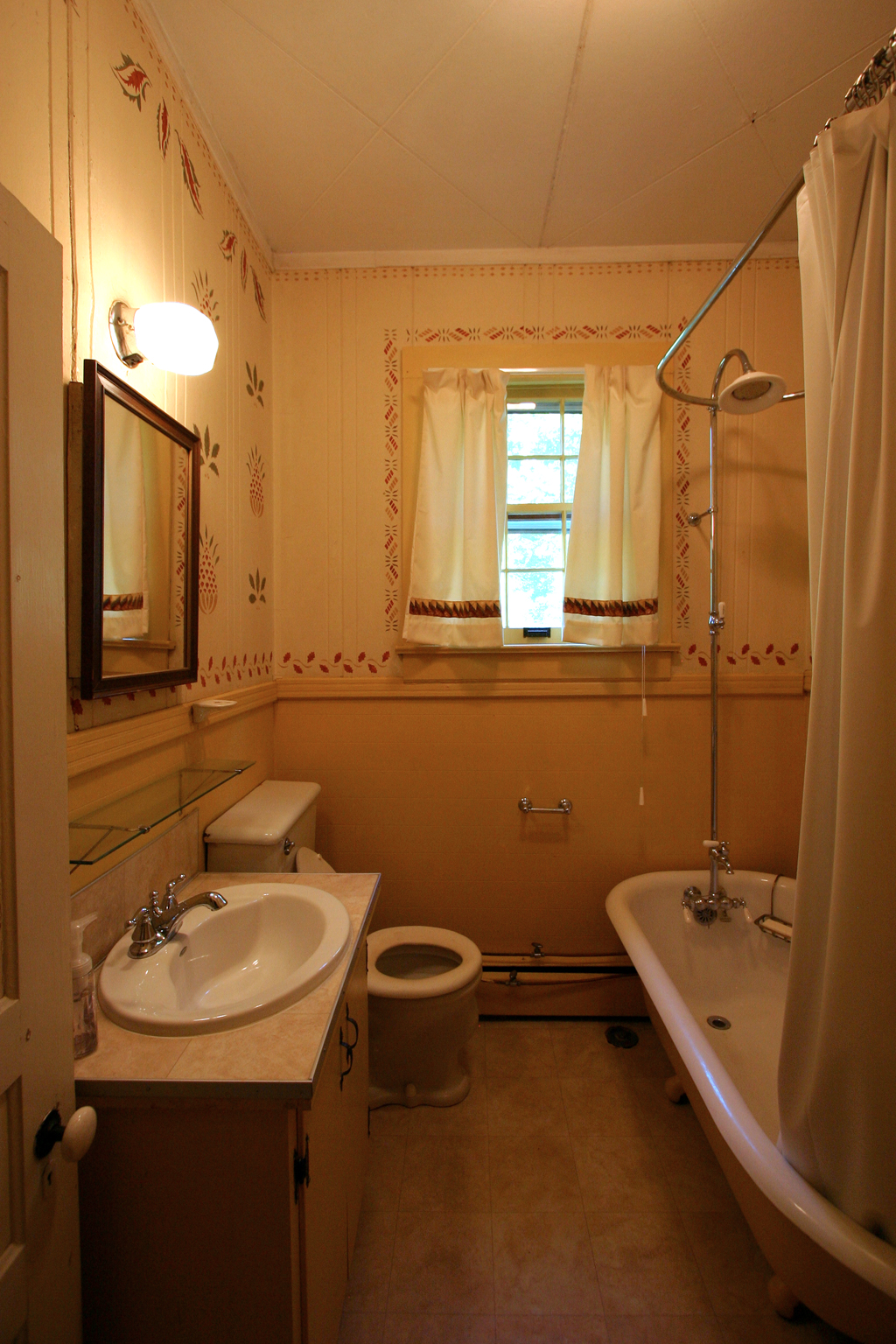
I can sum up the upstairs hall bathroom in one word: yellow.  It’s very, very yellow, which Weezie likes to remind me is a color often associated with a frequent bathroom-based activity.  That’s my girl.

guest bathroom

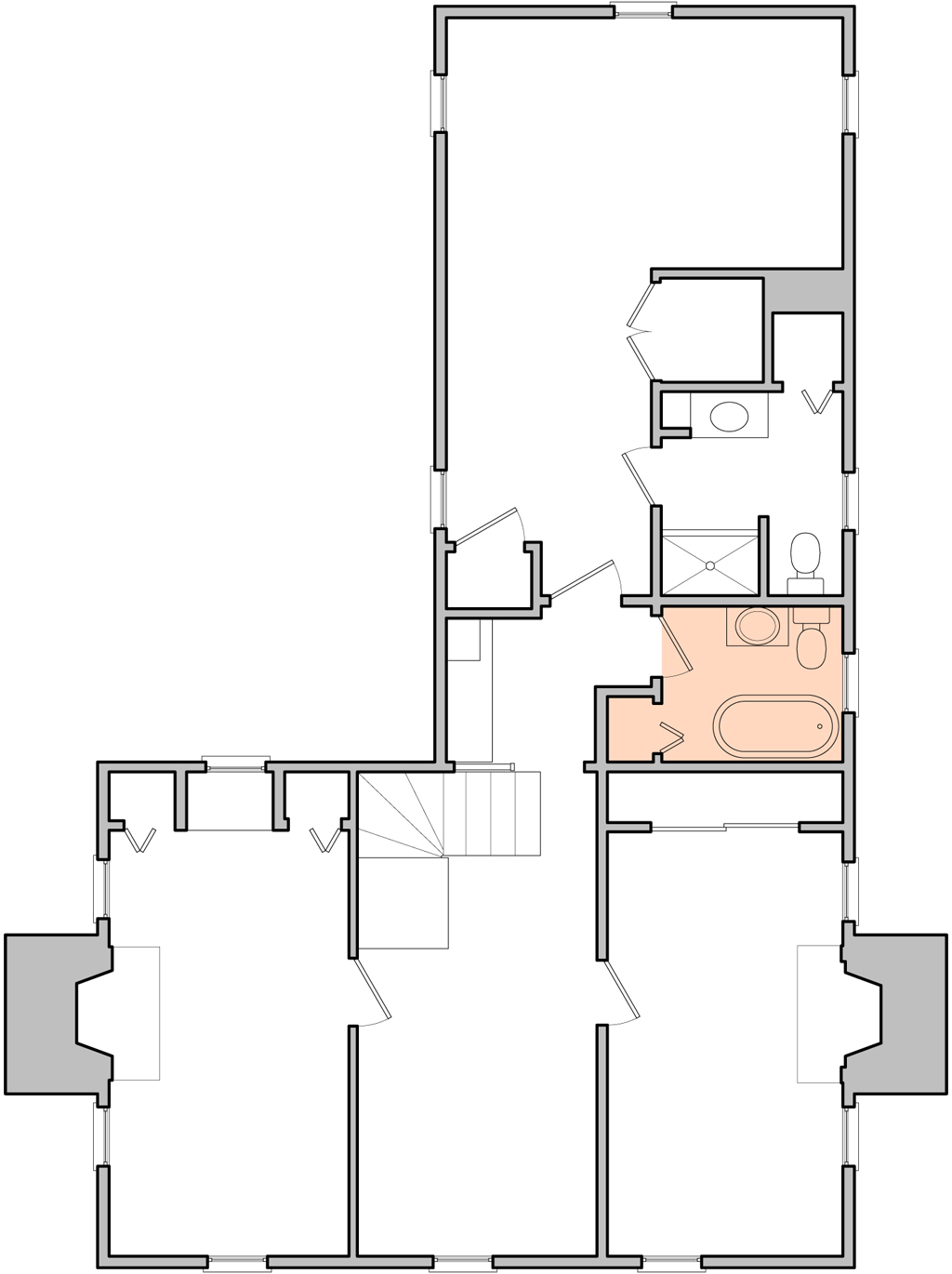
The layout is a conventional three fixture setup with a toilet and sink on one side and a tub on the other. A small east-facing window admits some light without compromising privacy. At the other end of the room, a sizable linen closet pokes into the adjoining hall, providing plenty of storage space.

guest bath

Here I’ll insert my oft-repeated analysis of the condition of rooms in this house: the space is reasonably functional, but in desperate need of an aesthetic overhaul. The embossed and stenciled fiberboard wall and ceiling panels are getting a bit haggard. The vanity is plain and the vinyl floors unremarkable. One exception is the clawfoot tub which is in good shape and is worthy of preservation, though it’s been plumbed with exposed copper tubing that restricts water flow to a trickle.

And then there’s the infamous old toilet, recently replaced. Of it, Weezie writes:

While it may seem odd for such a young blog to have more than one entry about toilets already, the toilets themselves were not so young. And the last of three toilets to go certainly deserves mention. The guest bathroom beauty was a cast iron relic stamped with the year 1918 (that’s 95 years old for those of you trying to do the math in your heads). While we both enjoy Downton Abbey (at least the first season) and find the era that it depicts fascinating, that fascination does not extend to the plumbing of the time. Part of me would like to see that toilet celebrate its centennial, but deep down I know that a toilet that predates the Treaty of Versailles (or the Carter administration, for that matter) has got to go. So, for the good of our water bill (and our guests), this throne has been dethroned in favor of another Toto Drake II. I’d like to think that we’ll find a tasteful way to preserve it as some sort of yard ornament, but if you look in the dictionary, “tasteful toilet yard ornament” is the first entry under oxymoron.

For now, the hall bath works for our infrequent guests, but I’m sure there will be some more urgency about improving its condition once it sees more regular use.


Before tour: the master suite

Welcome to the master suite (boom-chicka-wah-wah).

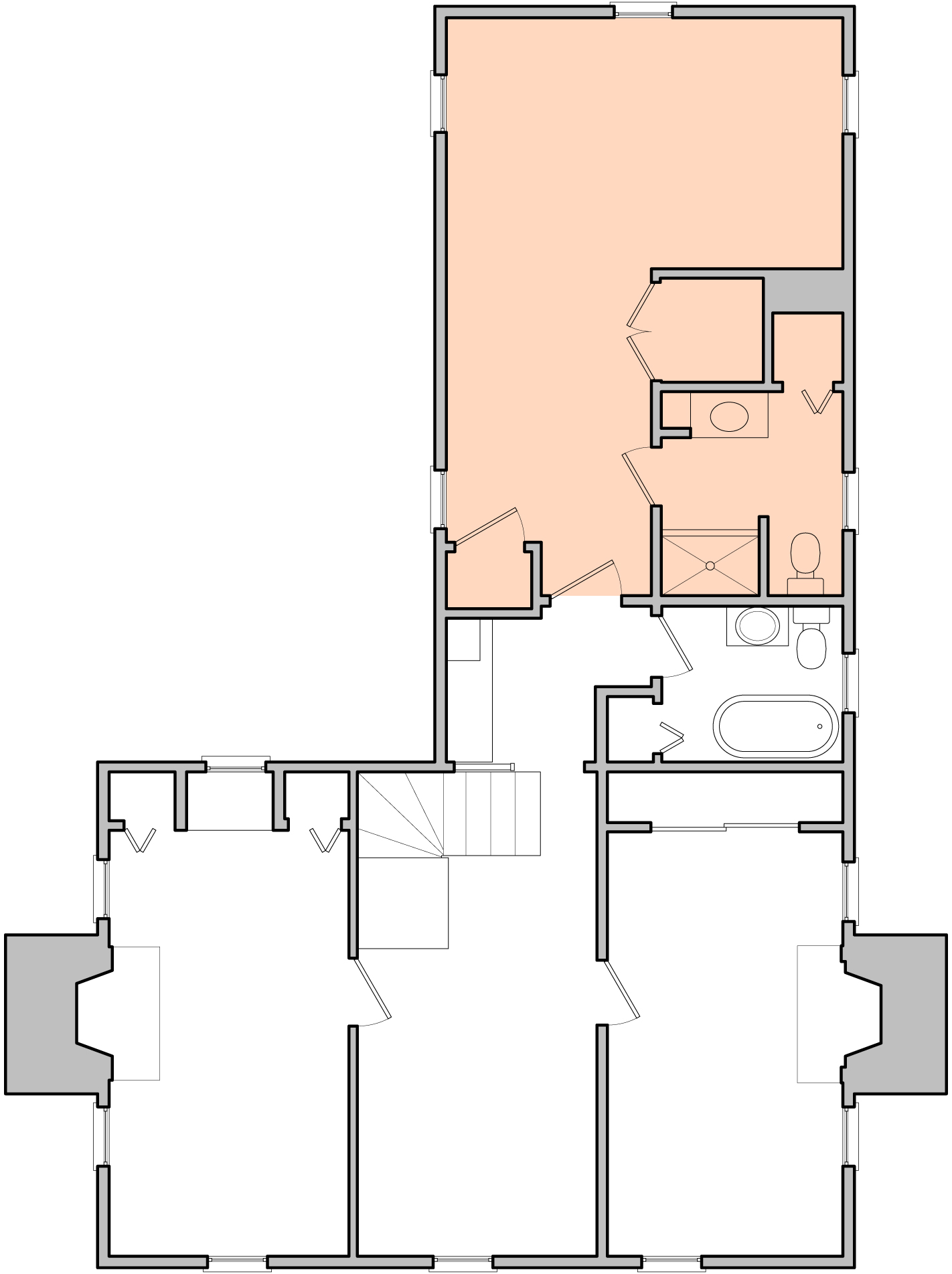
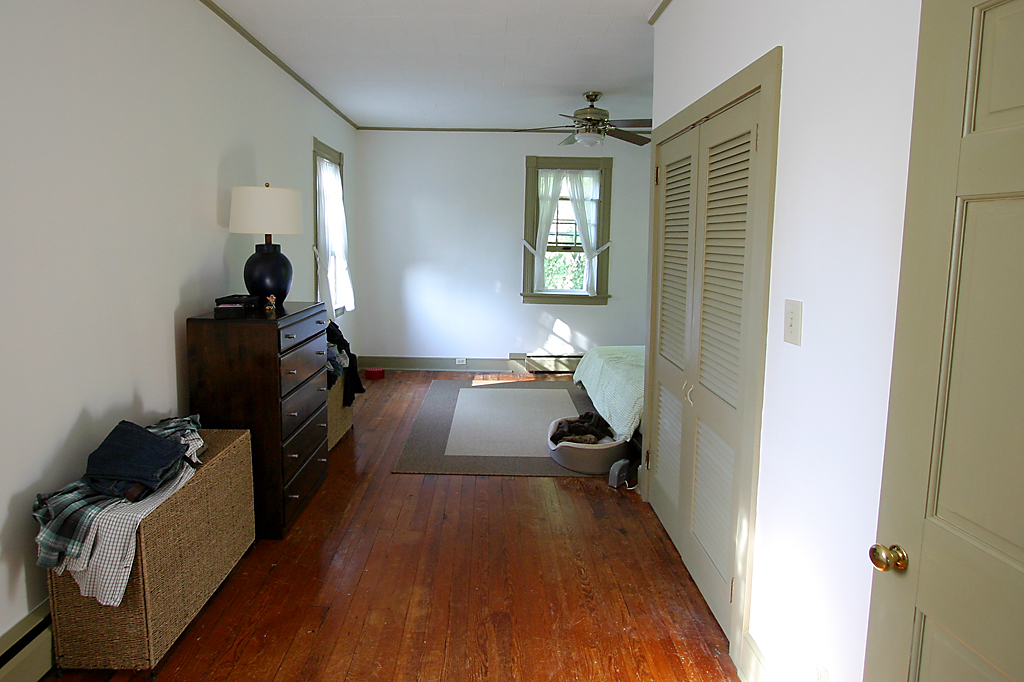
At nearly 23 feet long and 16 feet wide, the master is one of the largest spaces in the house, but it feels much smaller due to an awkward layout that forces the bed into a corner that measures only 8 by 10. The bathroom and closet occupy the southeast corner of the room, creating an L-shaped space that’s difficult to furnish efficiently. The long leg of the L is too wide to be a hallway, but too narrow to be home to anything other than a dresser. Louis uses this area to work through spastic bouts of puppy energy while we’re in the bathroom.

master bedroom plan

At some point, the master suite was cobbled together from two smaller bedrooms, which explains its size, uncommon in houses of this vintage. The north end of the room is pleasantly daylit, with large windows on three sides. Unfortunately, this feature can work contrary to the goal of restful sleep, particularly when you have a puppy that’s ready to rock and roll at the faintest glimmer of dawn. A shutter order is in the works.

The closet is cavernous, but its square shape makes it difficult to take advantage of the large volume. Buried in the wall behind the closet is a chimney, which I’ll expose to the room one day, perhaps throwing our house’s nickname, Seven Hearths, off by one.

master bedroom

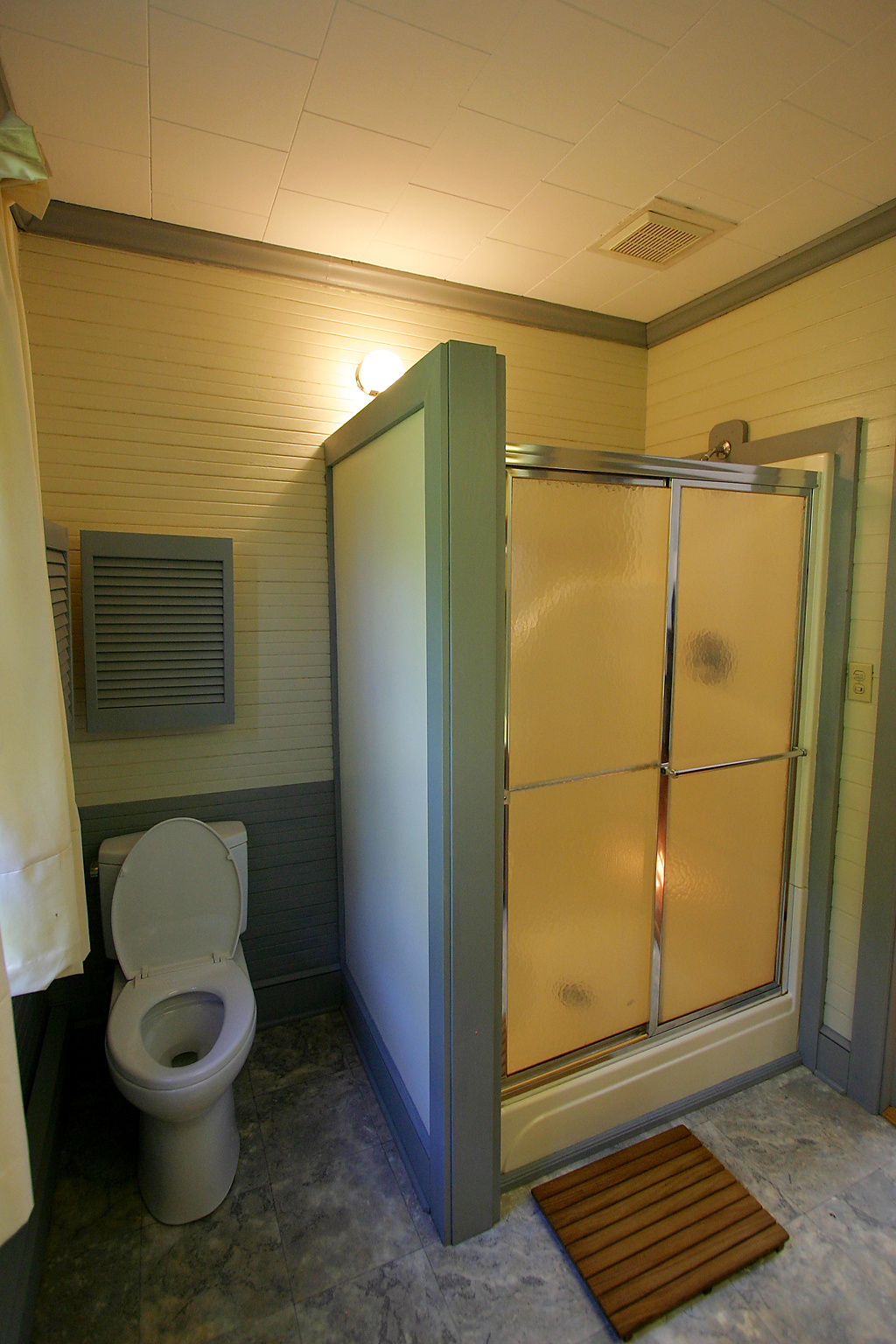
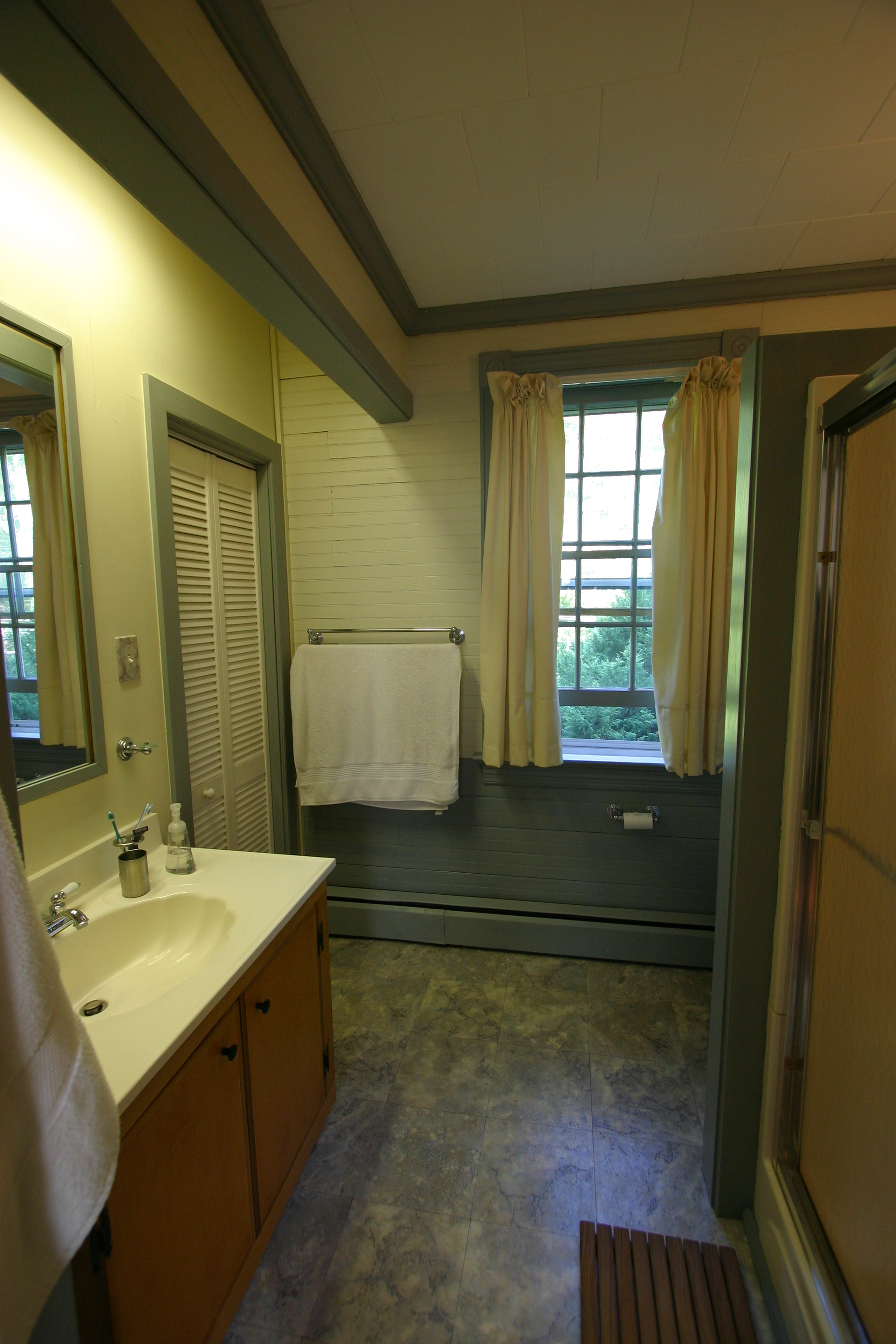
If any room in the house could rightfully be labeled “updated”, the master bath is it.  A new-ish vanity and shower insert and a brand-new toilet keep bath time a notch above disgusting. Though unattractive, the linoleum floors are durable and easy to clean.

master bathroom

master bathroom

The ceilings throughout the room are Celotex tiles over beautiful beadboard planks (shaking fist at all those who foist the “easy fix” on unknowing and frustrated homeowners). The walls are drywall, though there’s evidence to suggest there’s beadboard below that as well. The floors are narrow heart pine boards that are pitted, gouged and stained in ways that make you wonder if the room was once the site of a UFC cage match.

master bedroom

Though there are no immediate plans to renovate the master suite, we can’t wait until we’re able to. As our friends and relatives can attest, Weezie and I keep geriatric hours and consider 10:30 p.m. the middle of the night. Any improvements to our nightly domain will be greatly appreciated, if only through closed eyelids.

Insect elixir

I got some nice feedback about the photo I posted on July 4th of some beautiful yellow flowers growing in our backyard.  Since then, the blooms have multiplied and are apparently full of the butterfly equivalent of crack:

butterfly yellow flower

All day every day butterflies (and bees and hummingbirds) swarm around the prolific yellow blooms.

insect elixir

I’ve asked several people what sort of plant this is.  The best guesses so far have been swamp daisies or some sort of sunflower.  But neither of those seems exactly right, at least based on my amateur Google research.  Each stalk is around eight feet tall, with large, jagged leaves that emerge from its sides.  For most of its growth cycle, it looks like a weed on ‘roids.  The flowers are daisy-like with numerous yellow petals around a dark orange center.  It’s clearly a species that thrives in full sun.  Last year the blooms weren’t nearly as impressive, but have improved since I removed the walnut saplings that surrounded it.

Can anybody ID this plant?

Ordinary archaeology #002: Who was Bill East?

Who was Bill East?

If I were a betting man, I’d say he was a mischievous young boy who visited our house on April 12, 1936. Or, maybe 1836?

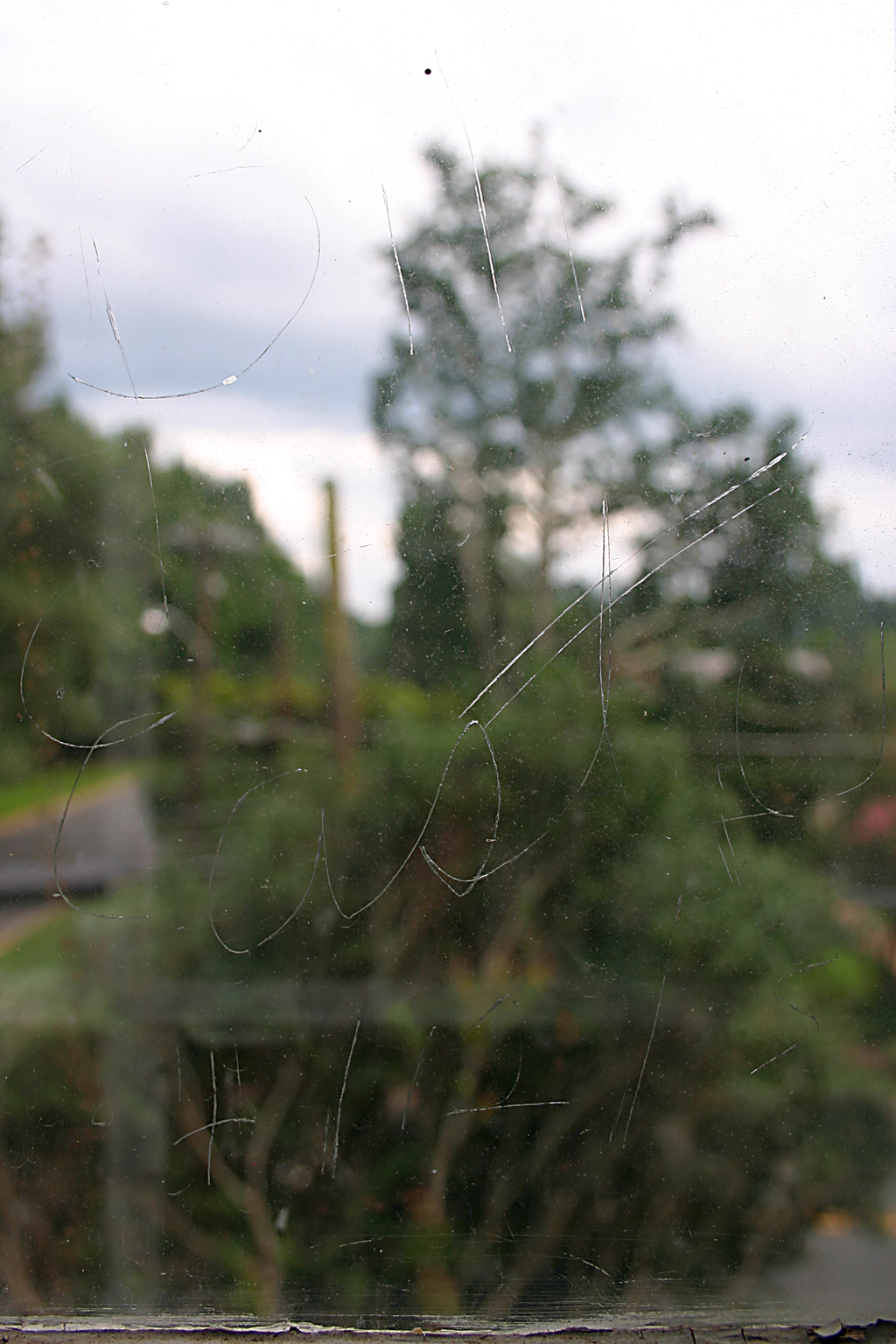
If you look carefully at the front window in the east bedroom, you’ll see that Bill commemorated his visit by etching his name into one of the runny glass panes:

name carved in glass

The next pane over has a smaller, less confident “Bill” inscription, perhaps a test run for the final engraving.

It’s possible that Mr. East is still with us; if he was seven in 1936, that’d make him 85 today. Whoever he was, I’m sure that Bill would be proud to know that his mysterious legacy lives on, upstairs in the Ordinary House.

Pretty ordinary #009: July 4th edition

In 1776, our house was already 22 years old. That fact fascinates me endlessly.

I wasn’t all that interested in American history during my grade school years. But in the context of this house, I’m fascinated by it. I wonder what life was like in the Ordinary House on July 4th, 1776? How long was it before the residents knew what happened that day? Did a declaration of independence from Britain frighten them, was it exciting, or was it some mix of both?

The Regulator movement, protesting corruption by royal government officials, was well-established in these parts and several of its participants were hanged by British troops only a few hundred yards from our front door. Grievances of this sort fanned the flames of revolution, leading to that fateful day when our great nation was formed.

This continuity with our past is part of the power of architecture, and is one of the reasons I’m such an ardent supporter of preservation.

The experiment of these United States isn’t perfect, as the evening news reminds us. But, I think we can all agree that we’re lucky to live in a country that affords us the freedom of opportunity that our founding fathers so desired.

Happy Fourth!

yellow flowers

If it ain’t rodents, it’s ruminants.

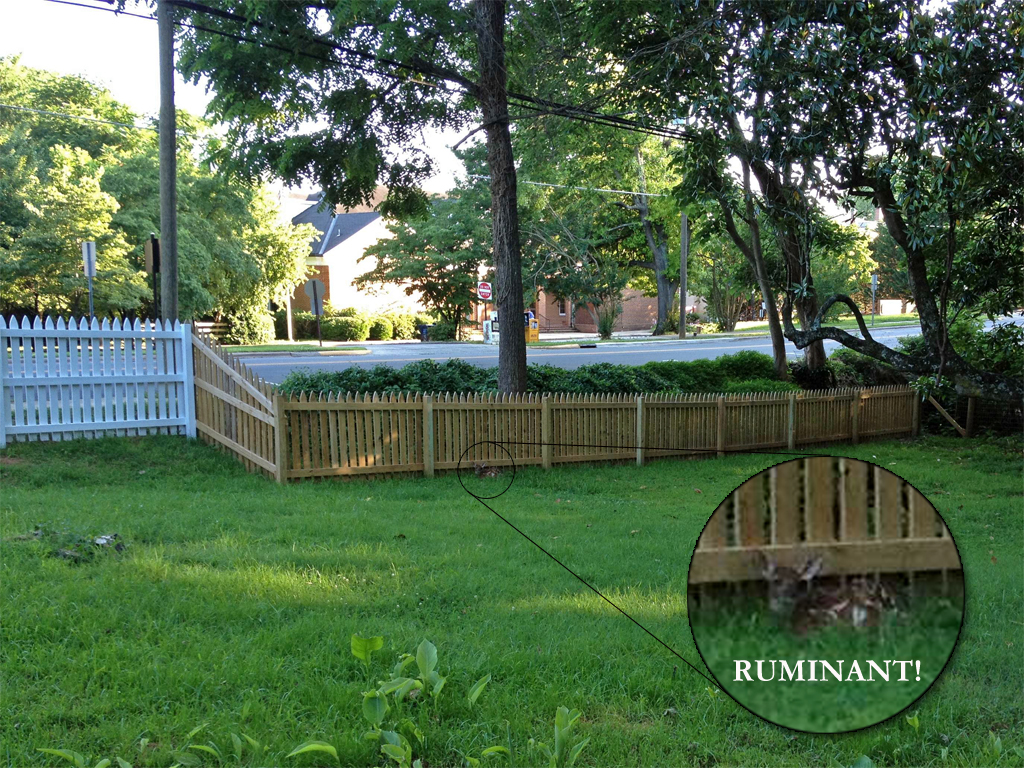
Recently, perfectly elliptical patterns of trampled vegetation began appearing in our lawn. It was like a midget UFO was using our yard as its personal landing spot. But, the true culprit was revealed when I pulled into the driveway one evening and a startled deer fawn leaped from the underbrush and sprinted for cover. Unable to jump any of our fences, the fawn paced the perimeter of the yard until its mother appeared at dusk, taking cautious glances at her offspring from the shelter of the neighbors’ trees. I propped a gate open, and a few hours later the family was gone.

I figured that the incident would cause the animals to steer clear of our yard for awhile. But this weekend, I was outside one afternoon and saw the same fawn quietly lounging by the fence in the front yard.

deer fawn at fence

Mom was nowhere to be found. I was a bit perplexed by this behavior until a little Google-ing taught me that deer daycare consists of parking your kid somewhere (anywhere will work, apparently, which explains the flat spots in the lawn), giving them the “stay put” signal, and literally high-tailing it to the nearest patch of woods.

Perhaps deer like the adrenaline rush of being discovered because the fawn and its posse have visited our yard several more times over the past week.  And they made it clear why deer fencing is so tall.  In the picture below, I caught one of the animals mid-flight, effortlessly leaping a retaining wall from several yards away.

leaping ruminant

Capable critters, yes. Smart? Certainly not.

At least they don’t try to live in your attic.


Pretty ordinary #009

There’s not much I don’t like about magnolia trees. Their thick, waxy leaves, low-hanging, climbable branches and attractive shape make them a favorite feature in any southern landscape. We were fortunate to inherit two enormous, aged specimens with the Ordinary House. They sit in an ideal habitat at the bottom of the yard, on the banks of Stillhouse Creek. For the past few weeks, they’ve been particularly beautiful, as their huge, creamy white flowers emerge for a late spring show.

magnolia flower

Comfort engineering

To kill time during layovers on our recent trip, I read Bill Bryson’s fact-filled exploration of human health and comfort, “At Home“. In the book, Mr. Bryson emphasizes how many of the technologies in our homes are brand new relative to the length of time that mankind has roamed the Earth. For 99% of our history there was no plumbing, no electricity, and certainly no air conditioning.

Consider our home, “only” 259 years old. If I was able to transport back in time and explain to the house’s first owner that one day a device on the wall would allow him to regulate the indoor temperature to a specified degree year-round, he would surely declare me mad and have me committed to the loony bin.

So, in a strange way I’m slightly ashamed to be the one to install central heat and air-conditioning in William Reed’s Ordinary. Even during our grandparents’ lifetimes, it wasn’t a technology that was universally attainable or expected. All the former owners of our house lived without it. In the summer, porches, shade trees and a languid pace made life tolerable. In the winter, fires, extra layers of clothing, and thick blankets offset the chill. When it comes right down to it, living several months without heat wasn’t THAT bad. It was frequently uncomfortable, but life carried on normally, just with thick sweaters on. A colleague of mine once asked his grandmother how folks got along before air-conditioning. Her response: “In the summer, people were hot.” As a society, we could benefit from stepping back to appreciate the everyday luxuries that we take for granted.

I was determined not to let the urgency of our discomfort negatively impact the quality of the HVAC installation. On a job site, the mechanical guys are the ones that cut the big holes, and there’s no end to the devastation they could unleash on a house of this vintage if left unsupervised. I gathered three estimates and selected Newcomb and Company of Raleigh based largely on their reputation and their willingness to think things through before being awarded the job.

There were two simple rules I established for the system’s installation:

1) No ducts can cross the basement – this room has a storied past as a tavern, a happy future as my man cave/grog hall and ceiling beams way too low for any big pipes to run below them.

2) Aside from tactfully placed condensor units and air grilles, the installation should be invisible, with no awkward protuberances in the corners of rooms that betray a lack of planning or forethought.

Fortunately, our estimator listened to these concerns, worked with me to develop a plan that addressed them and assembled a crew that was capable of following through once we pulled the trigger.

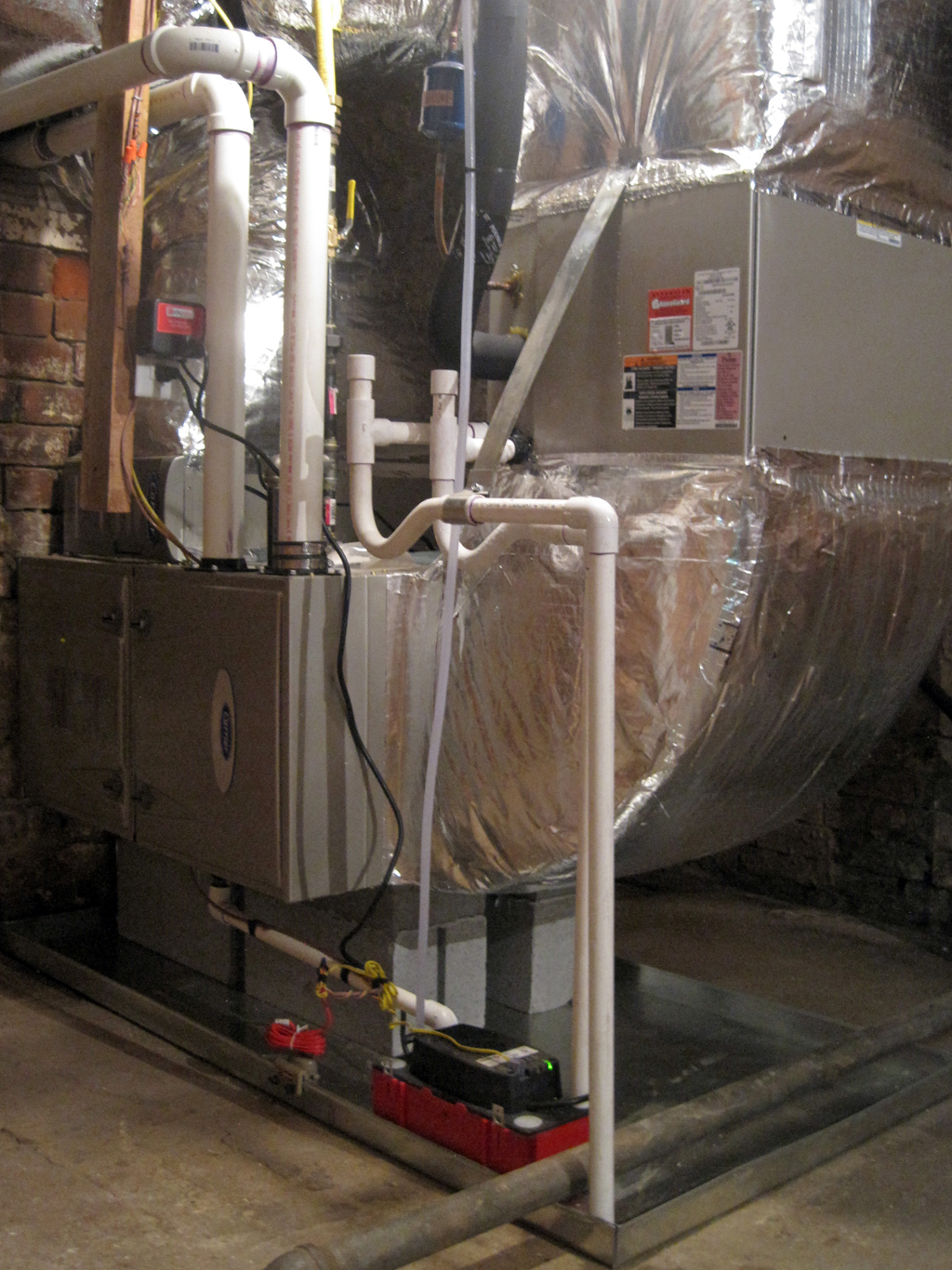
A modern heating and cooling system requires an impressive network of connections to bring it to life: supply and return air ducts, a power line, a gas line, a combustion air intake, an exhaust air outlet, a condensate drain, an overflow condensate drain, a condensate pump, a refrigerant line and a low-voltage wire to the thermostat. So even though the indoor units are the size of a large suitcase, the spaghetti of pipes, wires and hoses that surround them eats up a lot of space.

furnace

The Ordinary House is spread out over no fewer than five floor levels. Because of this, we ended up with three separate HVAC systems, with 6.5 tons of cooling capacity and 180,000 btu’s of heating. There were several situations where it simply wouldn’t have been possible to run a duct from point A to point B. So, we ended up with one system for the library, one for the main floor, and one for the upstairs. This setup has two built-in advantages. First, we’ll never be without heat because of a mechanical failure again. If one system goes belly up, there are two more to keep us warm. And second, three systems = built-in zoning. By programming the thermostats to reflect our daily schedule, I can be sure that we’re only paying to heat and cool the parts of the house that we’re actively using.

Based on the amused expression that spread across the HVAC contractor’s face at the mere mention of the words “heat pump” (he likened our house’s walls to the bottom of a colander), we opted for high-efficiency gas furnaces to provide heat. These units run at 96% efficiency, extracting residual heat from their own exhaust, and squeezing 96 cents worth of hot air out of every dollar we spend on natural gas (recall that our boiler was probably running at only half this efficiency). Additionally, the furnaces are two-stage, meaning that they can run in a “low” stage the majority of the time, saving fuel, decreasing wear on the equipment, and preventing too-quick temperature swings.

The air conditioning units are also two-stage. On low, the systems have long, low-speed cooling cycles that are extremely energy efficient. If the units reach their set temperature but detect high humidity levels, they activate a dehumidification mode, running the blower fans at imperceptible speeds, edging the humidity down without over-cooling the house. The swamp-like conditions of the past few weeks have given this feature a workout.

All three systems have 4″ thick pleated media filters that are more effective at scrubbing the air than standard filters. With 200 years of dust floating around, they’ll certainly be busy.

The thermostats that control these systems are fairly simple to use, but employ all sorts of fancy algorithms to determine run times and optimize efficiencies. Given the challenges of regulating temperatures in a leaky old house, the ‘stats have done a remarkable job of maintaining a steady, comfortable temperature without overworking the equipment. Heating or cooling, the systems run in low speed most of the time, which becomes obvious when the energy bills show up in the mail.  Our natural gas bill was halved compared to when we were running the boiler, and it was only heating half the house due to a malfunctioning circulation pump.

The upstairs unit is in the attic, where the temperatures are less than ideal for cooling equipment in the summer. But the steep pitch on the roof makes access a breeze and we were able to run ducts to all the upstairs rooms without any difficulty.  The return grille sits inconspicuously in the ceiling of the hall outside our master bedroom. To get the gas line, refrigerant line and condensate drain to the attic, I bought some extra lengths of downspout from my gutter man and had them disguise the pipes and hoses in it where they run up the side of the house.

downspout for gas line

The downspout butts into the underside of the soffit, and opens directly into the attic. From the street, you’d never know that the downspout isn’t integral to the gutter system. We were fortunate to be able to reuse the electrical circuit from the old attic fan to power the unit. Otherwise, we might have had to tear off plaster to fish a wire from the basement to the attic.

The main downstairs unit is in the old boiler room, consolidated to a corner that I’ll one day enclose as a utility room. Because the crawlspace under the kitchen is all of 12″ tall, we supplied the air to this room through the risers of the stairs that lead to the dining room.

stair supply grilles

Finding a way to return the air for this system was tricky. In the end, I elected to bring it through one of the wainscot panels in the living room. On the other side of the wall, a metal box punches through the floor to the crawlspace below.

return box

When we relocate the kitchen to this room, I plan to hide the box in a base cabinet. Since the return is in a visible location in the living room, we invested in a decorative cast aluminum cover that’s pleasing to the eye. When the grille gets painted, it’ll look tailor-made for the spot.

return grille

The library unit lives in the crawlspace below that room. It has a return grille that punches through the wall of the closet beneath the stairs to the slave quarters.
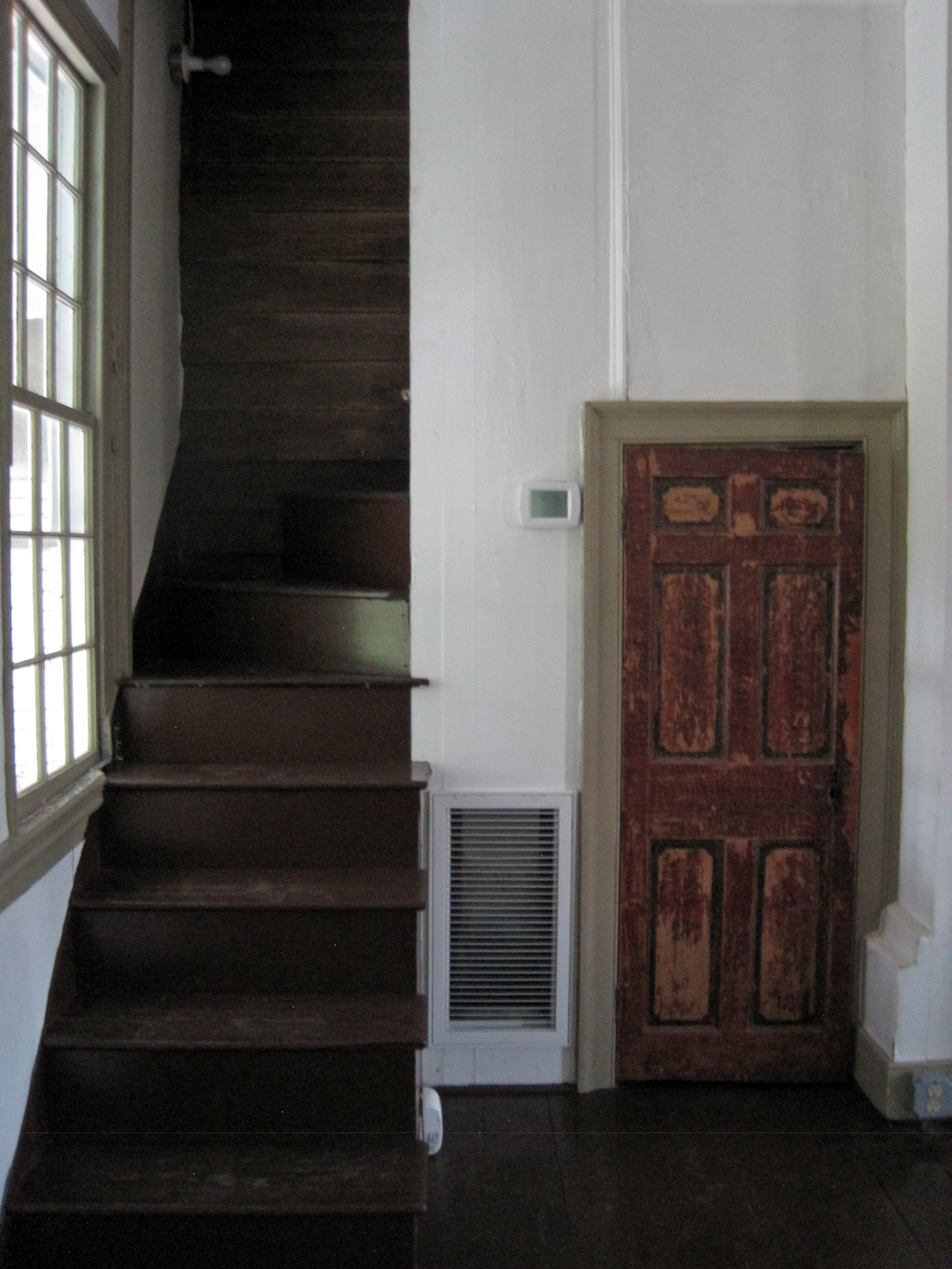
library return

The same closet provides a home for a supply duct and the electrical lines running between the new electrical panel and the air-conditioning units.

So far, all three systems have heated and cooled flawlessly. The equipment seems to be sized correctly, with no short-cycling or struggling to meet set points. Our energy bills are reasonable for a house of this vintage, and best of all, we’re completely comfortable. The install was enormously expensive, a total pain the ass, and absolutely worth it. Despite the stress, I’m glad I was the one to introduce central air to the Ordinary House. With any luck, our new systems will keep us comfortable for several decades until the next wave of mechanical technology comes along. Whatever that may be, I just hope it requires smaller holes.

Anybody need five window units?

The *award-winning* ordinary house

259 years old and still charming ’em…we can all hope to age so well.

I’m proud to report that our initial efforts to breathe new life into the Ordinary House were recognized by the Town of Hillsborough last Friday when we received a 2013 Preservation Award for “The Preservation of a Historic Exterior”.

preservation award

I joked that if anybody knew how long the remaining to-do list for the exterior was, they might have waited another decade before praising our accomplishments. Nevertheless, it’s very gratifying to know that people are watching our progress and consider it worthy of recognition. Check out my interview with WCHL in Chapel Hill about the award here.

To everyone who has stopped by to lend advice, tell a story, or just say “attaboy” – thank you. The acceptance and support that we’ve received from our new neighbors and friends has made our labors seem worthwhile and have shown us just how friendly Hillsborough is.

We’ve only been at this for nine months and we’re only getting started, so I hope that you’ll continue to follow along as we delve into the next phase of renovations, beginning with the kitchen.

Congratulations also to Sandy McBride and Kim Richardson, and Mark and Jennifer Soloman for their awards  – we’re in good company!

preservation award ceremony